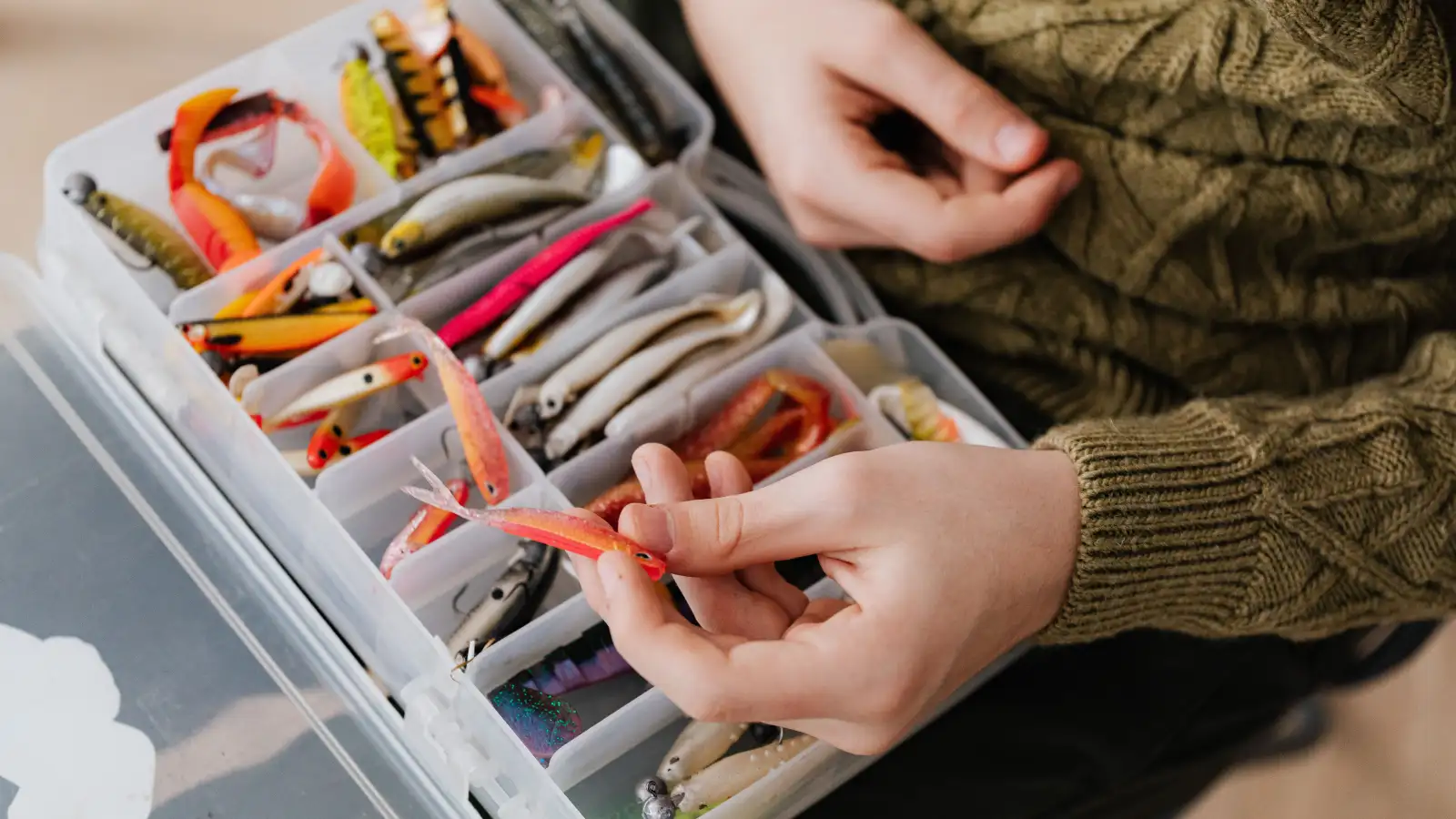
Where the hook ends up inside a fish's mouth is the strongest single predictor of whether that fish survives being released, and bait fishing puts the hook deeper than lure fishing does. Handling, wet hands, and photo speed all matter, but they matter downstream of location. Lip, corner of the jaw, hinge, or somewhere past the gills: that address is set by a choice made an hour before the strike.
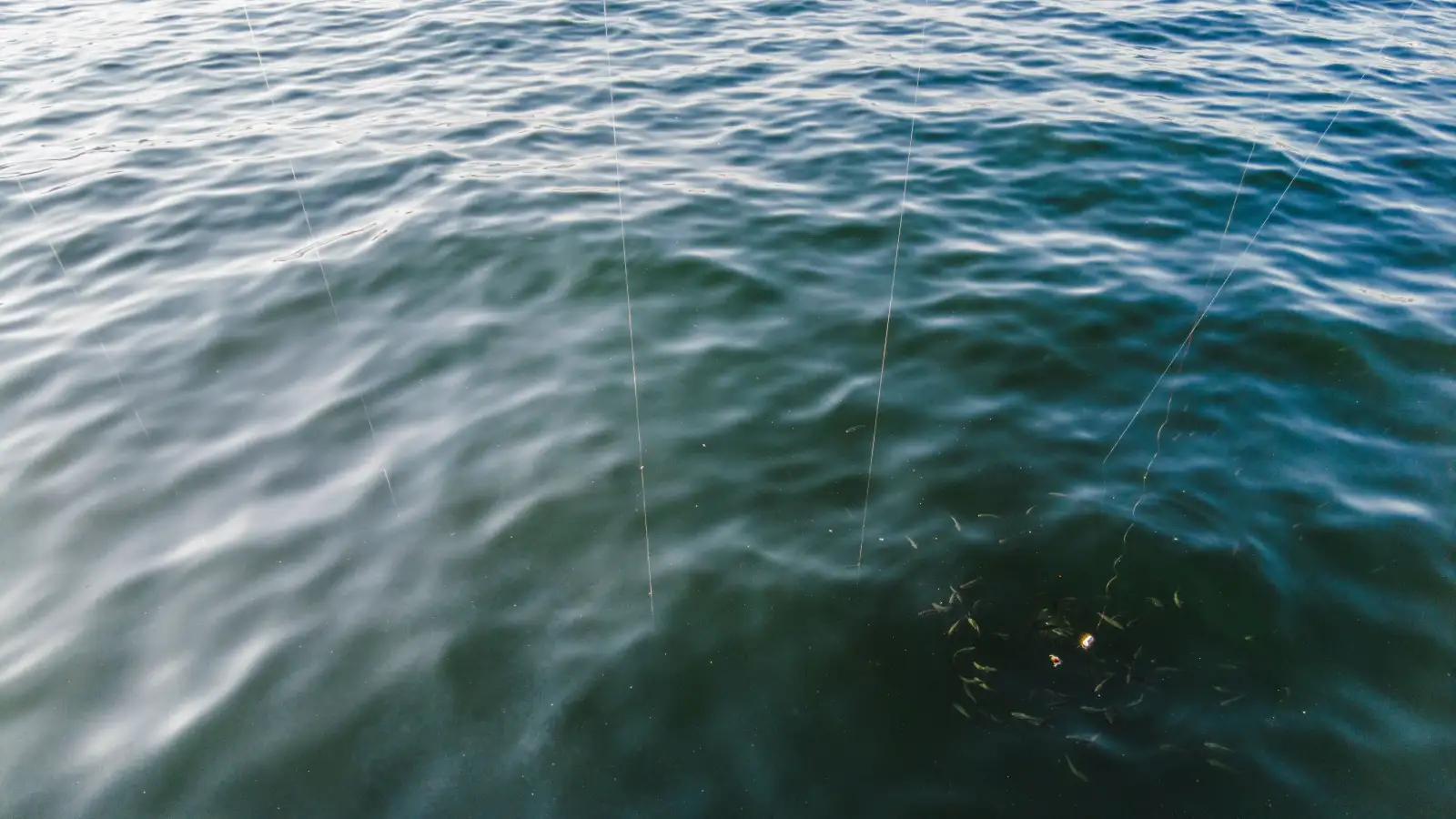
The rod cannot tell you
I'm on a pond bank in late June, light going orange, rod sitting in a forked stick with the line running out to a sliding sinker and half a nightcrawler on the bottom. I'm not holding it. That's the whole posture of bait fishing. You set the rod down, you watch, you wait. A bait soaks. That's its advantage and that's its trap.
The tip taps. Then it pulls down and holds. My hand is on the rod and I'm already doing arithmetic: bluegill, bullhead, how long has it had it. I count. One, two. Right there, that count is the decision, and I made it before I ever felt the fish.
I lift, the fish comes in, and when I get a hand on it the hook is not where I want it. It's past the jaw, back in the throat, out of sight. Same tap. Same weight on the line. Nothing in the rod said a word.
The next evening, same water, small crankbait, cast and retrieve. A fish slams it on the move. There's nothing to wait for because the fish did the work itself, running off with something that was already traveling. It comes in hooked in the corner of the mouth. It comes in that way almost every time, because that's where the geometry puts it.
Here's the part that took me years to actually absorb. From the rod end, those two fish felt identical. Not similar. Identical. A thump is a thump. A bait fisherman never gets a signal that says this one is deep. The feedback loop doesn't exist. You find out when the fish is in your hand, and by then the choice is already spent.
That's why the habit is so stubborn. There's no correction happening in real time. The bad outcome arrives silently, and it looks like luck.
Time is the whole mechanism
The reason a bait fish is more likely to be hooked deep is duration. A bait sits still and a fish can pick it up, mouth it, turn with it, start to swallow it, all before you commit to anything. Every one of those seconds is the hook traveling farther back. On a lure, the fish is usually intercepting something that's moving, so the take and the hookset are nearly the same event. Waiting through a bait take deletes that simultaneity. That's it. That's the engine.
Which also means the old advice to let a fish take it before you set is really advice about landing fish, not about releasing them. Those are two different goals and they pull against each other.
Hook style is the other lever, and it's the one you can pull without giving up bait. Circle-style hooks work on different geometry. The shape does the work as the fish turns away with the bait, and the point tends to find the corner of the mouth rather than sliding back into the throat. You're mostly letting the line come tight instead of driving the hook home, which feels wrong for the first dozen fish and then stops feeling wrong. Not a guarantee, and I won't pretend it is. But it tilts the odds in a way a bigger hook or a heavier sinker does not.
Single hooks versus trebles is a separate trade. A treble hooks more reliably and tears more tissue, three points, more punctures, more time with the fish out of the water while you work it loose. A single hooks less often and comes out fast. Neither one is the good guy. What matters is that unhooking time is time the fish spends out of the water, and that stacks directly on top of whatever the hookset already cost.
It stacks
Hooking location carries the most weight, but it doesn't act alone. It adds to everything downstream.
Fight a fish to exhaustion on light line and you've drained the reserves it needed for the recovery it's about to attempt. That's true whether the hook is in the lip or past the gills. A lip-hooked fish played down to nothing still has a worse shot than one that came aboard quick with its head up.
Now put a deep hook on top of that. Then hold the fish out of the water for a photo. Each of those is a cost, and they don't stay separate. They add. A fish can absorb one. Three of them on a warm afternoon in water that's already short on oxygen, and the arithmetic turns ugly fast.
I've handled fish that looked perfect going back and I have no idea what happened to them after. I've also watched a fish right itself in my hand, swim four feet, roll, and come back up sideways. That one had been hooked deep. I'll never know for certain it was the hookset that did it. But I know what the inside of its mouth looked like, and I know how long it had been out of the water, and I know how long the fight ran.
What I do differently
I still fish bait. It catches fish when nothing else will, in cold water, on slow days, on fish that have seen every lure in the box three times. The trade is real and pretending otherwise would be dishonest.
What changed is that bait stopped being a set-it-and-forget-it thing for me. If a bait goes out, I'm holding the rod. I'm not walking the bank. I set on the first real move instead of waiting through a run, because the wait is exactly what buys the deep hook. If I'm on water where I know I'll catch a pile of small fish I don't intend to keep, I'd rather throw something else entirely, because every one of those is a release and a risk I'm taking for a bite. And there are afternoons I skip bait altogether even when it would out-fish everything else. Hot day, shallow warm water, fish already stressed. That's not a rule, it's a read.
The honest limit is that you don't find out. A deep-hooked fish sometimes tears off like nothing happened. A perfectly lip-hooked fish sometimes doesn't. You never see what happens after it leaves the shallows. But you do get to choose where the hook goes, and that's the one part of this you actually control, which makes it worth thinking about before the float goes down rather than after.