Bass fishing becomes a repeatable plan the moment it stops being a search for a lucky spot and starts being a sequence of decisions you run in a fixed order: species and habitat, season and water temperature, a read on the water itself, lure family, rig, and finally presentation. The second half of that rule matters as much as the first, because when the bite dies, the fix is to troubleshoot from the top of the list downward, not to tie on something new.
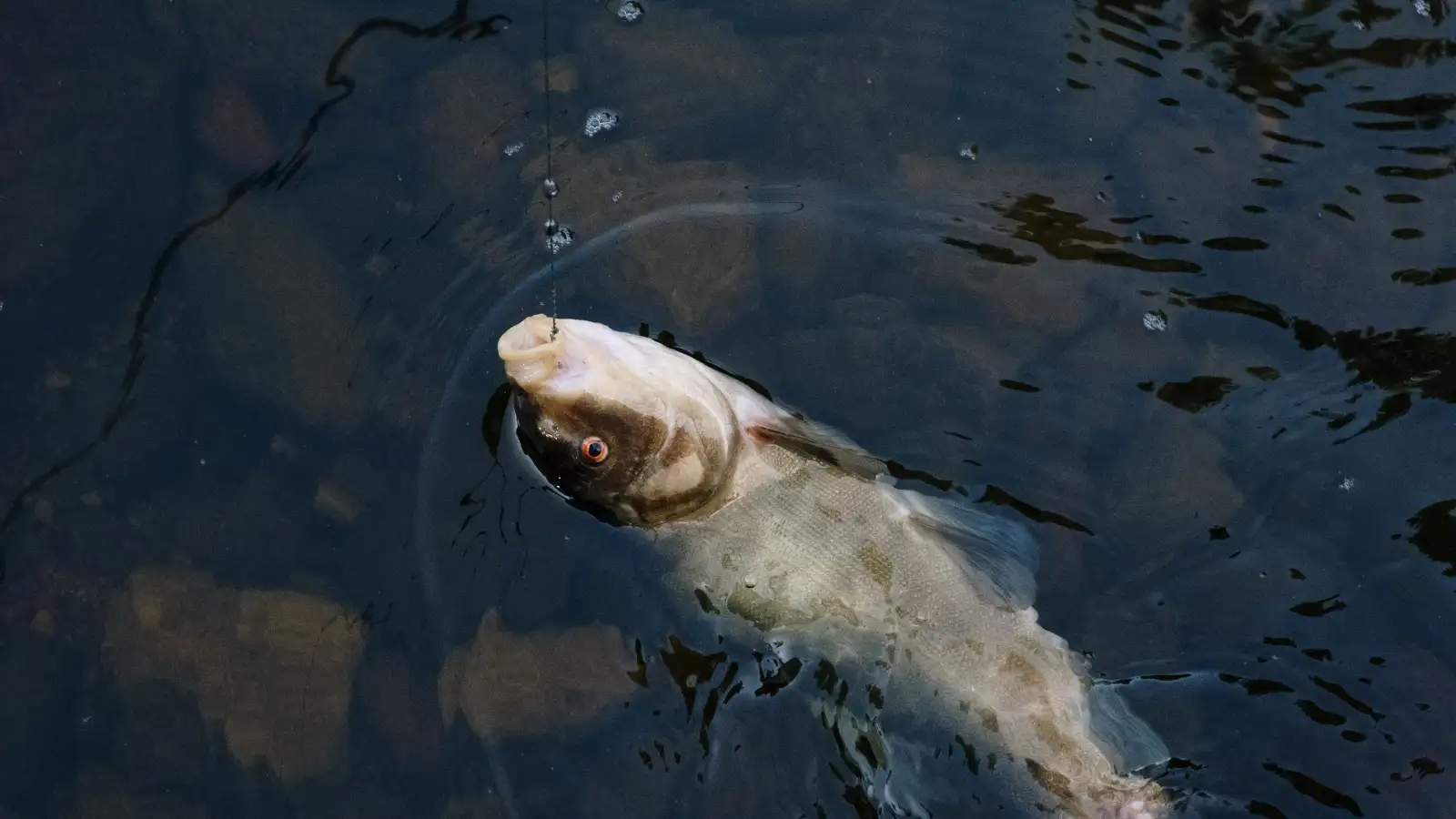
I'm on the front deck with the trolling motor on low, watching the surface temperature creep up half a degree as the sun clears the ridge. Fifty-one and climbing. Two weeks ago this same arm of the reservoir read forty-four and the fish were sitting in twelve feet on the first break. This morning there's bait flickering along the lip of that break and I haven't made a cast yet.
Three decisions are already locked in. I'm fairly sure which bass I'm over: largemouth in the wood and grass, with spotted bass a real possibility out on the point behind me. I know roughly where fifty-one degrees says they should be sitting. I know the water is stained, which tells me how a bait needs to announce itself. The lure is the fourth decision. It's also the one most people make first, and that habit is the thing worth breaking.
The Sequence, and Why the Order Is the Point
Every tier narrows the next one. Species tells me what habitat to look at. Habitat plus water temperature tells me how deep and how far off the bank. The water read tells me how the fish will find a bait. Only then does lure family make sense, and after that the rig, and after that the presentation. Six decisions, each one cutting the list of workable answers down.
Run it in reverse and you get the day everyone has had. Forty minutes without a bite, so you cut off the bait and tie on another one. Then another. You're changing the cheapest, fastest, most visible variable because it's the easiest one to reach, and you're doing it while standing in the wrong depth, over the wrong cover, in the wrong part of the season. Presentation changes are cheap, which is what makes them seductive. They're also downstream of everything else, which is what makes them useless when the problem is upstream.
Species First, Because It Redraws the Map
Largemouth are the shallow-cover fish. Vegetation, laydowns, docks, flooded brush, warm and slow water, low oxygen tolerated. They ambush, and they eat big.
Smallmouth want hard bottom: rock, gravel, chunk rock, current. Rivers, reservoir points, windblown banks. Cooler and clearer water suits them, and they're far more willing to chase something moving fast than a largemouth is.
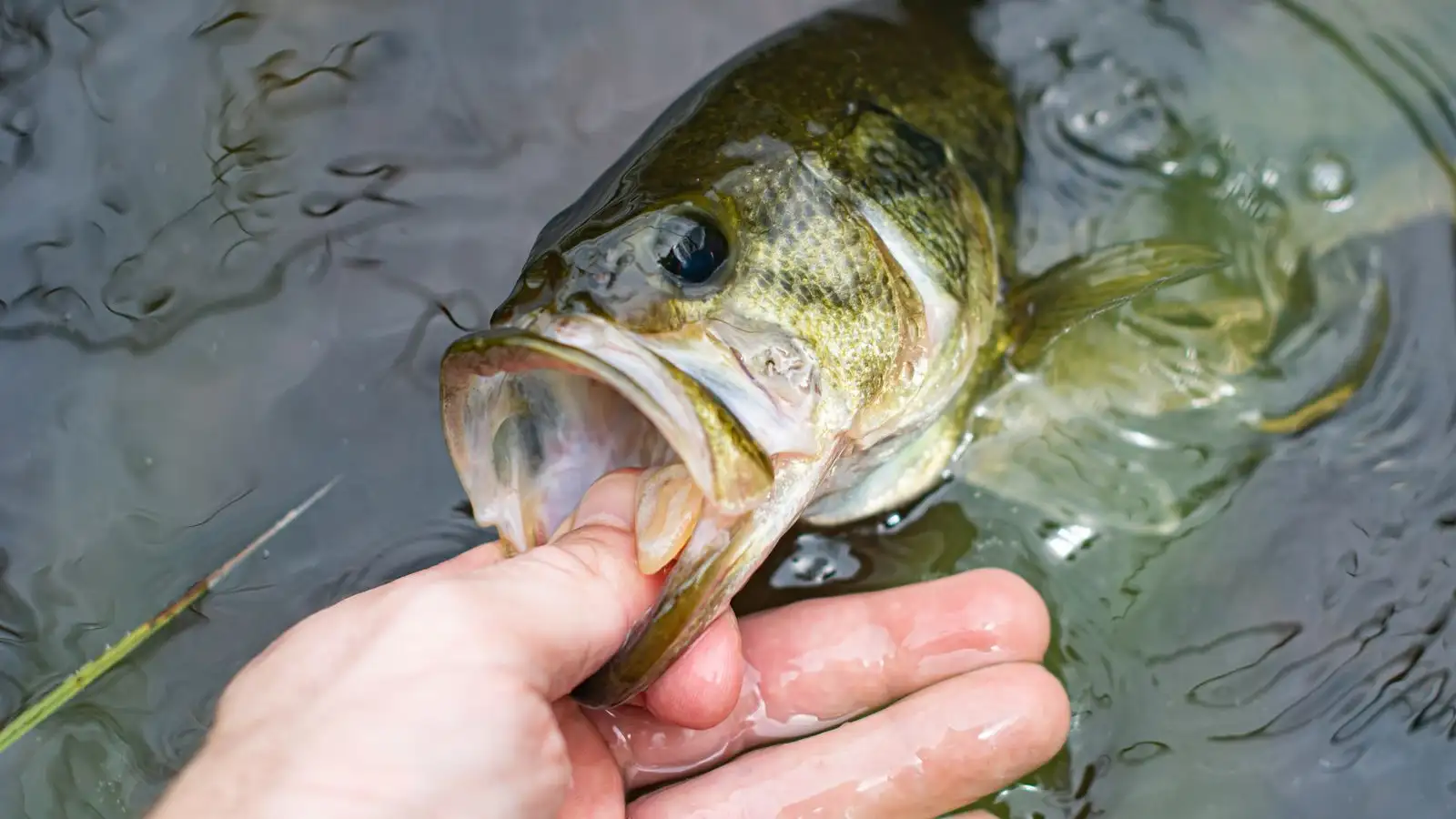
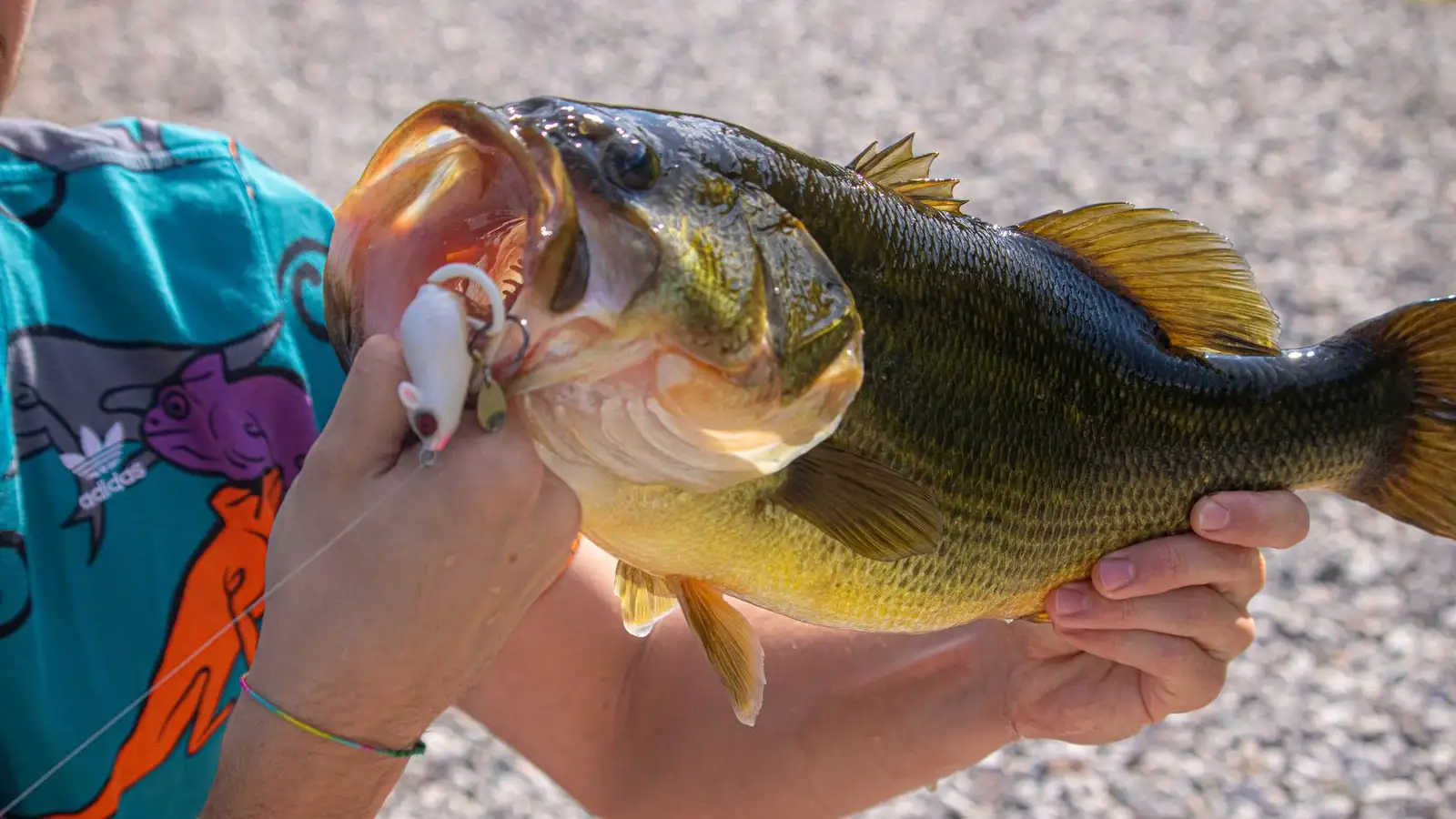
Spotted bass are the ones people misidentify, and the mistake costs them a whole pattern. Spots live on deep structure in reservoirs, points, humps, channel timber, brush on the break, and they tend to school. On a lot of southern reservoirs they hold the deep-structure niche that smallmouth hold farther north. Quick field check: a largemouth's upper jaw reaches past the back of the eye, and a spot's or a smallmouth's does not. Run a fingertip over the tongue if you want a second confirmation, since spots usually carry a rough tooth patch there that largemouth do not.
That's the reason species comes before bait. Two fish in the same reservoir on the same day, at the same temperature, want completely different water.
Temperature Is a Clock, Not a Lure Chart
Water temperature doesn't tell you what to throw. It tells you where the fish should be, and the schedule runs roughly like this.
In the forties they're deep and slow, and whatever you throw needs long pauses and a small profile. From about fifty into the high fifties, prespawn, they move up in waves and stage on secondary points and channel swings; a warm rain ahead of a front can shove a whole group shallower in a day. Low sixties to mid sixties is spawn, beds in the shallows, sight fishing, fish at their most vulnerable. Postspawn, upper sixties into the seventies, is the awkward stretch. They suspend off the first drop, they're hard to pin down, and plenty of people quit on them right when a topwater or a swimbait would be doing the work.
Summer heat pushes them to deep structure and into the band above the thermocline where the oxygen is. Fall turnover mixes the water and scatters fish for a week or two, and then, as it cools toward the fifties, the bait moves shallow and the bass follow it back into the same shallow cover they used in spring.
The number matters less than the direction and the stability. A stable fifty-five in October is a different bite from a climbing fifty-five in March, and falling water temperature behind a cold front will shut down shallow fish no matter how well you've read everything else.
Read the Water and the Menu Shrinks
Three things, and I check them in this order: clarity, depth, cover.
I like to idle a stretch before I fish it, one eye on the graph looking for the first break and the cover sitting on it, the other on the surface looking for the color line where creek water meets main lake. Stained or muddy water means fish are finding bait by vibration and silhouette, so bulk, noise, and moving baits earn their place on the deck. Clear water means they can study a bait from a long way off, so smaller profiles, natural colors, longer casts, and finesse presentations start to win.
Depth is wherever the first real break is and where the cover sits on it. Fish relate to edges: the weedline, the lip of a flat, the outside edge of a dock, the rock pile on the point.
Cover type settles the family. Grass gets something that can come through it. Wood gets something you can pitch into it and let fall vertically. Rock gets something that deflects off it and triggers a reaction.
Read clarity, depth, and cover honestly and you should be down to four or five baits. If you're standing there with fifty options, you skipped a tier.
Family, Rig, Presentation, in That Order
Family is a habitat-and-season decision. Jig, crankbait, spinnerbait, bladed jig, soft plastic, topwater, swimbait. That's the level where you commit.
Rig is a cover-and-clarity decision. It's how a soft plastic is assembled, which hook, how much weight, whether the point is buried or exposed. A tube rigged to drag gravel is not the same bait as that same tube rigged to fall through brush, even though the plastic is identical.
Presentation is the mood of the fish. Speed, cadence, the angle of the cast, how long you let it fall. This is the tier you should touch last and the one almost everybody touches first. If the fish are sitting in the wrong depth band, the best cadence in the world just gets you a more elegant skunk.
Rod, Line, and Where the Hook Actually Goes
Rod and line aren't separate decisions. They're what makes the other decisions physically true.
Power is how much force you can put into a hook. Action is how the rod bends, and that shape controls both the way the lure moves and the moment the hook goes in. A fast tip loads quickly, which is what you want on a single-hook bait you have to drive home through thick plastic. A slower, more parabolic bend absorbs the head shake of a fish with treble hooks and keeps those hooks from tearing out.
Line does similar work from the other end. Braid doesn't stretch, so it sends every bit of bottom composition back up to your hand and cuts through grass, but it also has no give, and a treble-hooked fish on braid will get a hole opened in its mouth. Fluorocarbon sinks and gets hard to see underwater, which is why it earns its place on finesse presentations. Monofilament and copolymers stretch and float, which makes them a reasonable match for a walking topwater and for crankbaits, where the give is doing you a favor.
Then the hookset changes with the setup. Braid and a single hook: sweep and lean into it. Stretch line and trebles: sweep and keep the rod loaded instead of snapping.
The Release Belongs in the Plan
Wet your hands before you touch the fish and skip the dry towel. When the hook comes out clean, cup the fish under the belly or hold it vertical by the jaw, keep it off the hot carpet, and put it back before it starts thrashing.
The reason this belongs in a piece about catching fish is that on pressured water the release is what keeps them catchable. A bass that swims off strong is a bass you can catch again next month. Cut the air exposure short, especially in water in the eighties when the fish are already stressed, and think about crushing the barbs down if you're releasing a lot of fish in one day. A rubber-mesh net saves slime coat in a way a knotted nylon one doesn't.
A quick release also keeps you in the rhythm of the sequence. Every extra minute handling a fish is a minute you're not reading the water in front of you.
Why This Survives a Lake You've Never Seen
The spot was never the plan. A spot is a memory of one day's conditions. The sequence is portable: on water you've never laid eyes on, six tiers get you to a starting point in twenty minutes instead of two hours of casting at nothing.
Keep a note on your phone. Date, water temperature, clarity, the depth the bites came from, and the family that produced them. Do that for one season and what you have is pattern recognition instead of a list of places that worked once.
The honest limit: this doesn't put fish somewhere they aren't. Cold fronts, hard pressure, and a flat that simply doesn't hold bass can't be fixed by reordering your decisions. What the order does is tell you faster when to move, and that's most of the difference between a good day and a long one.