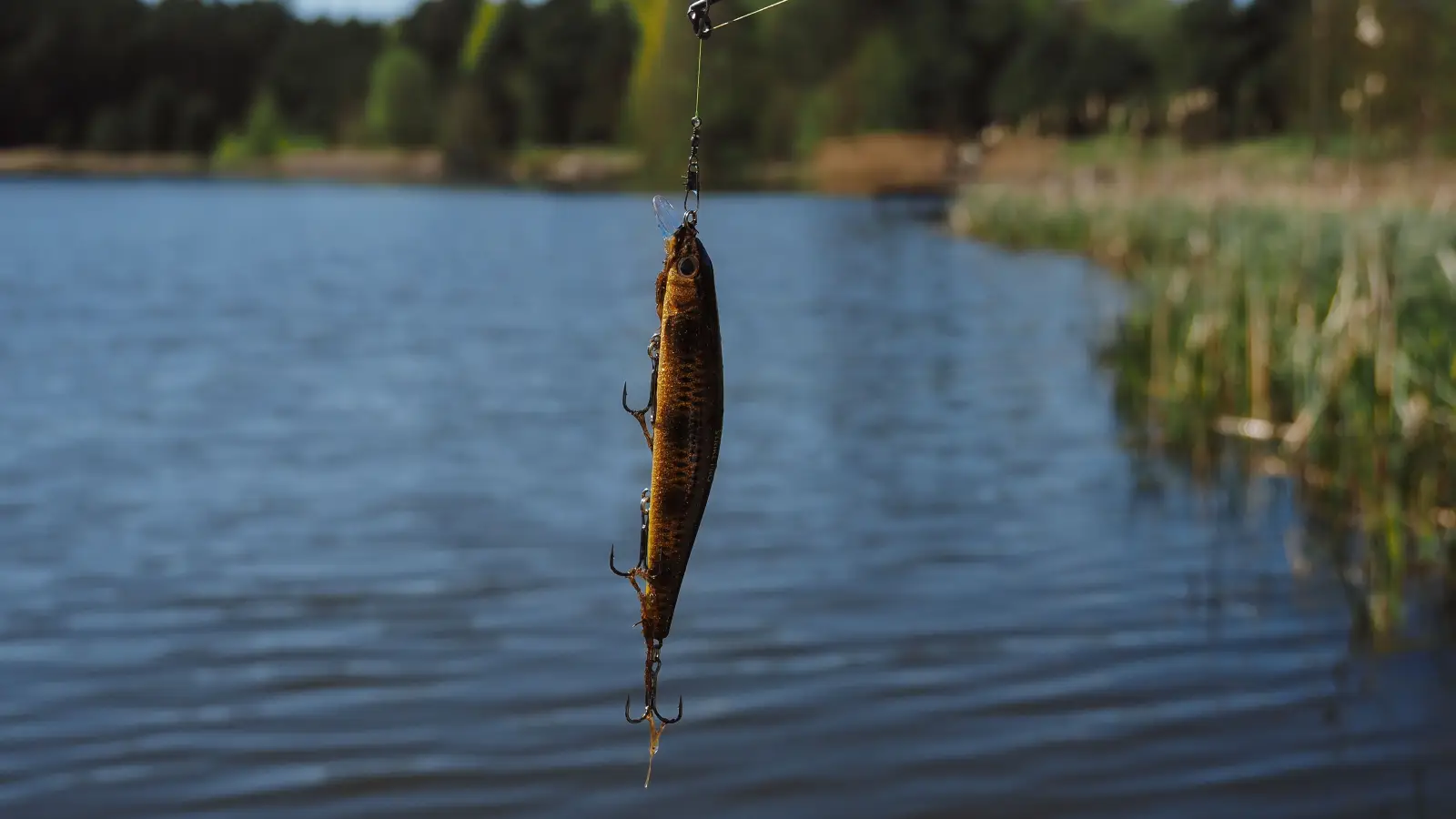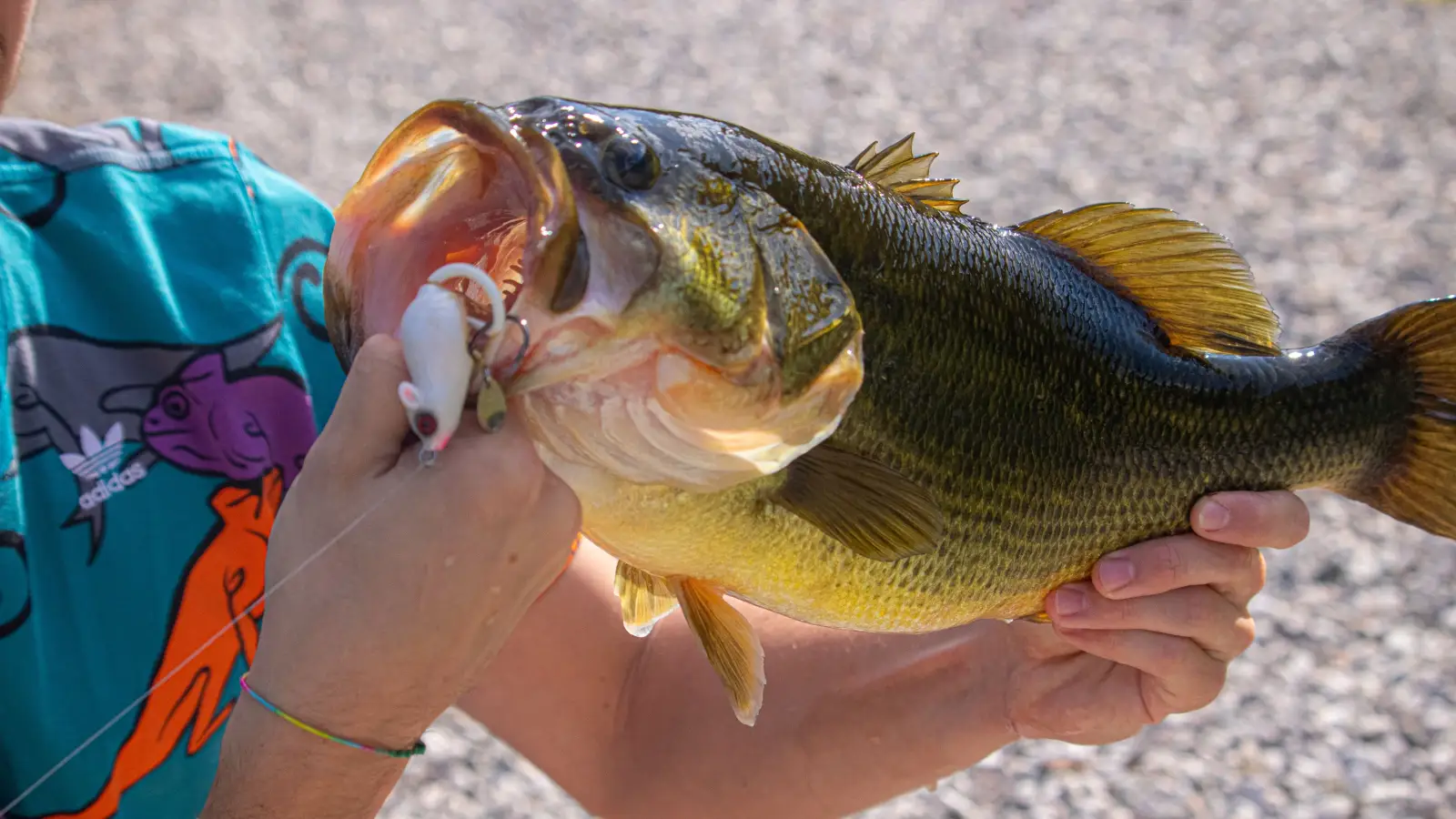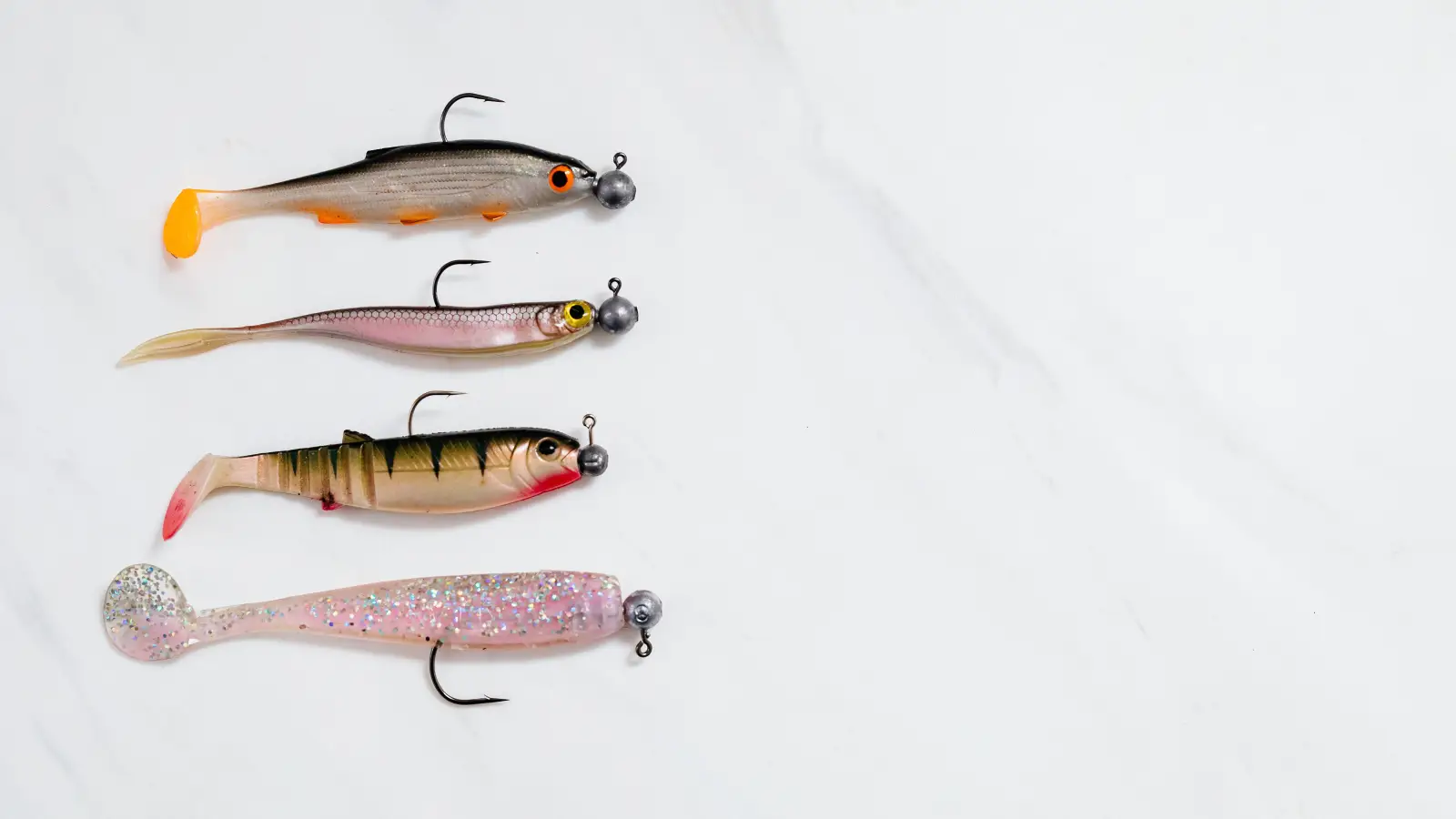
A straight-tail worm on a Carolina rig looks right to a bass when the retrieve stops. No built-in wiggle to give it away—just a slow, nose-down glide that says easy meal. The difference comes down to how each tail design interacts with the drag-and-pause rhythm. Paddle tails thump on the pull, curl tails flash on the fall, and straight tails glide without drama. It’s that glide that wins when bass are being stubborn.
Why You’re Still Getting Refusals on Your Carolina Rig
You drag a curly-tail worm and watch a bass swirl behind it but never take. The tail’s uncurling flash on the pause is too much. Your path through this article will show how to read that action and fix it by switching tails.
You throw a paddle-tail swimbait and see fish follow right to the boat, mouths closed. You’ll learn exactly when that heavy thump helps and when it shuts the bite down.
You pitch a creature bait on a Carolina rig and get fouled in grass or feel a single tap and then nothing. You’ll see how a straight tail cleans up the presentation and draws cleaner hits on the pause.
The Two Moves That Make a Carolina Rig Deadly (and How Your Bait Reacts)
The rig works because of two distinct feels: the drag and the pause. On the drag, water pushes against the plastic and forces whatever action the tail is built to deliver—a paddletail wobbles, a curly tail shimmies, a straight tail planes along with barely a quiver. When you stop winding, the pause takes over. The weight sits, line goes slack, and the bait does whatever its own shape allows. That’s the moment bass decide.
The pause exposes every tail design. A paddle tail goes dead—no thump, just a sinking blob. A curl tail often uncurls and flashes, like a false signal. A straight tail falls horizontally, slow and silent, looking like a stunned shad or a worm drifting down through the water column. The goal here is to feel that rhythm in your hands and picture what’s happening below.
Your play: next time out, focus only on the rhythm. Drag until you feel the weight tick bottom, then stop and count. Watch the line. Notice how your bait’s tail dictates what happens on the pause.
Ready to move on when: You can tell someone why a paddle tail vanishes on the pause while a straight tail comes to life, and you’ve felt the difference holding the rod.
Why Your Paddle Tail Is Scaring Fish Away on the Pause
A paddle tail pushes water hard on the drag, sending out a thumping vibration that bass can feel from a distance. In stained water with some chop, that thump cuts through the noise and calls fish in. In clear water, though, it’s too much. The thump becomes a warning, and when you pause, the bait goes from noisy to nothing in an instant—no subtlety, just a dead-fall that looks wrong.
The Carolina rig’s stop-start rhythm brings out this failure. The drag sells the bait, the pause kills it. That’s why bass follow but rarely commit. The clearer the water, the more that dead pause stands out.
Your play: take the paddle tail to a clear flat. Drag it with a 2-3 foot pull and a short pause. When you see fish trailing but not biting, tie on a straight-tail worm and run the same cadence. The difference usually shows up fast.
Ready to move on when: You’ve watched bass follow a paddle tail in visibility over 3 feet, then switched to a straight tail and got eaten on the next pause.
The Curly Tail’s Secret Weakness: It Flashes When It Should Be Still
A curly tail produces that familiar wiggle on the drag—bass notice it. But the trouble starts when you stop. As forward motion dies, water pressure releases and the tail unfurls with a sharp, brief flash before re-curling. That flash screams not real to an inspecting bass. It provokes reaction swipes more than committed eats.
The pause on a Carolina rig is supposed to be a chance for the bass to glide up and inhale. With a curl tail, the bass often slaps at the bait instead. You feel a tick, set the hook, and come back with nothing.
Your play: if you’re getting bumps that feel like a single rattle and then nothing, it’s likely the flash. Switch to a straight-tail worm in the same color. The flash disappears and the same fish will often suck the bait in.
Ready to move on when: You stop getting short strikes after you make the switch and start hooking fish cleanly in the same water.
The Straight-Tail Worm: Why Bass Finally Eat When the Action Stops
A straight tail does almost nothing on its own—and that’s the point. On the drag, it slips through the water with no vibration. On the pause, it settles into a horizontal, gliding fall, nose tipping down, tail trailing behind without a wiggle. To a bass, it looks like an easy, wounded creature that’s given up.
This bait leans into what the Carolina rig does best: separating the weight from the bait and letting the plastic fall naturally. No competing noise, no flash. When the pause comes, the worm is the whole show.
Your play: rig a 6- to 8-inch straight-tail worm on a 3/0 light-wire hook, with a half-ounce weight pegged about 18 inches up. Cast, let the weight settle. Drag 2-3 feet, then pause 3 to 5 seconds while keeping the line just taut enough to read. The strike often registers as a faint jump or sideways slide of the line. Sweep the rod smoothly—don’t jerk.
Ready to move on when: You’ve watched the line move on its own during the pause, set the hook, and swung a bass aboard that would have nothing to do with your other soft plastics.
From Muddy to Clear: A Tail-for-Conditions Decision Tree
Picking a tail means reading the water first. The retrieve’s two phases—drag and pause—work better with different designs under different conditions.
- Visibility under 1 foot, heavy stain, or whitecaps: Paddle tail. The thump gives bass a target they can feel. The pause doesn’t have to be pretty.
- Visibility 1–3 feet, bass chasing bait: Curl tail. The wiggle on the drag and a little flash on the fall can still pull active fish.
- Visibility over 3 feet, bass sulking or neutral: Straight tail. A silent drag and a seamless glide on the pause are what pressured fish trust.
Your play: before your first cast, glance at the water clarity. Let that decide your first soft plastic. If 20 minutes pass without a bite, switch tails or stretch the pause.
Ready to move on when: You can size up the water, tie on the right tail without hesitation, and catch bass on a Carolina rig all day.
Five Signs You’ve Figured Out Which Tail to Rig
- You can explain why paddle tails quit looking real on the pause.
- You’ve seen bass follow a paddle tail but refuse to eat it in clear water.
- You cured short strikes by swapping a curl tail for a straight tail.
- You’ve connected with a bass on a straight-tail worm during the pause of a Carolina rig retrieve.
- You now pick your soft plastic by looking at water clarity before you cast.
What You Don’t Need to Worry About (Until You’ve Got the Bite Figured Out)
- Leader material. Fluorocarbon vs. mono only matters after bass are eating your bait and you need extra stealth. First lock in the right tail.
- Bead color and sound. Clicking beads can add an edge, but they’re a bonus, not a starting point. Get the tail working first.
- Weight shape. Bullet, egg, teardrop—the weight’s main job is bottom contact. The tail’s action on the pause is what seals the deal.
- Exact hook gauge. A light-wire 3/0 or 4/0 covers most straight-tail worms. Fine-tune it once you’re consistently hooking fish.
Trigger to revisit these: When you can pull a strike on the pause almost at will, start experimenting with leader stealth, bead noise, and hook styles one at a time.
Quick Answers to the Questions That Come Up Next
Can I use a paddle tail in clear water if I shorten the pause?
Shortening the pause doesn’t quiet the thumping drag, which is what puts bass on alert in clear water. The paddle tail’s vibration is too brassy for the conditions. Switch to a straight tail instead.
What’s the best straight-tail worm size for a Carolina rig?
A 6-inch worm handles most scenarios. Step up to 8 inches in big water where bass key on larger forage, or drop to 4 inches when fish are tight-lipped and a smaller meal looks safer.
How do I detect a strike on a straight-tail worm?
Keep your eyes on the line where it enters the surface. A strike often shows as a sideways twitch, a slow tightening, or a subtle jump. Feel for a light tap and respond with a long, sweeping hookset—not a hard jerk.
Do I need a glass bead for sound?
Not right away. A bead’s clicking can help in murky water, but if you’re already convincing fish with the right tail, the bead becomes optional. Add it later when you’re chasing an extra attraction.
What a Day with the Right Tail Looks Like (and Your Next Step)
You’ll come off the water with a memory of line jumps on the pause and solid hooksets, and you’ll know which tail to rig just by looking at the conditions. Most anglers start with a curly tail and wonder why the fish bump it. Pull a green pumpkin straight-tail worm from your box, rig it weedless on a Carolina rig, and make your next cast with a 3-second pause after a short drag. That one adjustment turns refusals into solid eats.