A pier cast is a controlled drop into a lane, not a distance attempt. The angler who clears the top rail and keeps the peace on a crowded deck does it with a low underhand or pendulum swing that loads the rod with the weight of the bait hanging off the tip, releases before the rod passes vertical, and puts the rig down between two pilings instead of out in open water. Distance is the first thing you give up. On an elevated deck, with the rail at your waist and another angler's shoulder two feet from yours, it is also the cheapest thing you have to give.
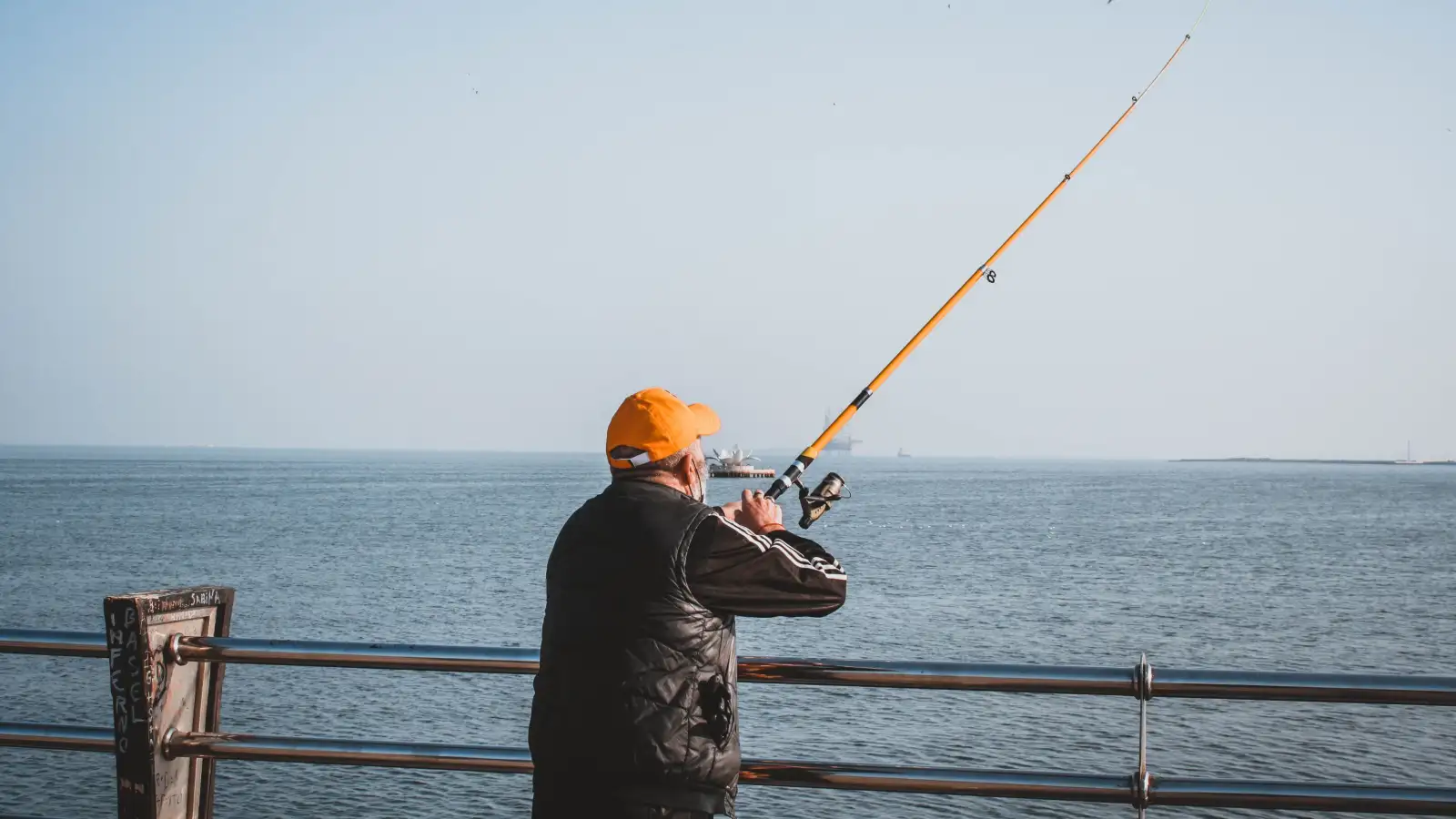
Stand at the rail with me. Cold concrete through your shoes. A smear of old bait where somebody cleaned a fish an hour ago. The top rail sits just below your belt line, weathered gray, crosshatched with a decade of line cuts. Off to your left a guy in a hooded sweatshirt has two rods in holders and both lines dropping straight down beside a piling. On your right a kid keeps trying a sidearm cast that clips the rail and snaps his sinker off. Everyone on this deck is fishing the same twenty square feet of water. You've got one rod, one bait, and about four feet of rail that belongs to you.
That's the whole problem. Everything you learned about casting on a beach or from a boat assumed you had room.
Distance Is the Wrong Scoreboard
The instinct at the rail is to lean back and heave. You want to reach the deep water out past the end of the pier, so you swing the rod overhead, the sinker passes your ear, and the whole thing goes wrong in one of three ways.
The sinker tags the top rail on the way up. Or it clears the rail, arcs high, and drifts sideways into your neighbor's line. Or the bait lands where you wanted and the spool keeps spinning, because a high, hard cast with a heavy sinker puts speed on the spool that nothing is going to govern once the bait stops.
None of those are casting problems. They're targeting problems. You aimed at the horizon when the fish were sitting thirty feet away against a piling, and you paid for the extra forty yards with everyone's patience.
The Pendulum Swing, Felt From the Inside
Here's the version I use ninety percent of the time at a rail. It feels less like a cast and more like dropping something over a fence.
Grip the rod with the reel handle up. Let the bait hang off the tip and swing it back gently, between your knees, not behind your shoulder. The sinker's weight bends the rod as it comes back, then the rod unloads as it swings forward, and that unload is your whole power source. You are not throwing. You are releasing.
Push the rod forward, tip low, and let the bait go while the tip is still around chest height and moving up. Released there, the bait leaves on a flat line four or five feet off the water. It never gets near the rail, and it has almost no arc for the wind to work on.
Then feather the spool with your thumb and feed line as the bait drops. That last part matters more than people think. Clamp the spool the instant the bait lands and the rig pendulums back toward you on a tight line, and you've lost the quiet entry you were trying for.
How Much Line to Leave Hanging
The distance between your rod tip and the bait is the single most adjustable thing in this cast, and it's the one people never change.
Long drop, big arc. The bait swings wide, the release point is automatically higher, and on a tall deck the sinker will hit the deck or your shin on the backswing. Short drop, small arc. The bait travels low and lands close, but there's less weight loading the rod, so your arm takes over and the cast goes high.
I want enough hang to feel the rod bend on the backswing and no more. On most rods I fish off a rail, that's somewhere between a foot and a couple of feet, and I shorten it further when the deck is high and the rail is close to my body. It isn't a number you look up. It's a feel you get after twenty casts, when the bait starts leaving flat every time without you thinking about it.
Pick Your Lane Before You Pick Your Target
Before the first cast of the day, look left. Look right. Count rods, count lines, and figure out which of them are actually in the water and which direction they run.
Two rods straight down beside a piling? You have the water outside them. One line running out at a hard angle to the left? That line owns a diagonal corridor, and your lane is beside it, not across it. What you're looking for is a vertical strip of water maybe eight or ten feet wide that you can drop bait into all morning without crossing anybody.
That strip is your lane. The target comes second.
If you can't find a lane, don't cast. Put the rod in the holder and wait for somebody to reel in. Ten minutes of standing there beats an hour of apologizing and untangling.
Aim Between the Pilings
Fish on a pier are not evenly distributed. They hold on structure: the pilings themselves, the shadow line each one throws, the rubble and shell at the base where the concrete meets the bottom. The middle of the span, forty yards out in open water, is usually the emptiest part of the whole pier.
So your target is often a gap. Two pilings with eight feet of dark water between them. The seam just outside the outermost row. A piling with a tide line running past it.
That's a forty-foot cast, not a hundred-yard one. Which is convenient, because the low pendulum cast that keeps you off the rail and out of your neighbor's lane is exactly the cast that lands a bait softly in a narrow gap. The two goals are the same goal.
The honest exception: sometimes the fish really are out in open water. A school moving through, fish pushing bait on the surface, something passing the end of the pier. When that happens you need the distance, and the low cast still works, you just add rod speed and take a couple of steps to a spot where you have room. Don't pretend structure fishing is the only game. Just don't start there by default.
Reel Setup on an Elevated Deck
If you're throwing a baitcaster, set the spool tension so a bait of the weight you're actually casting falls slowly and stops dead when it hits the deck. Not a fast drop, not a stall. Then set the brake to match that weight.
The reason this matters more on a pier than on a bank is the height. You are casting downhill, and the bait drops on a looser line than it would from shore. Add wind that hits an exposed deck from the side and you have a spool that wants to overrun the moment the bait touches water. I usually run one or two more brake clicks on a pier than I would with the same weight on a beach, and I'd rather give up a little distance than spend ten minutes picking out a backlash while somebody else is catching fish beside me.
On a spinning reel, same idea in a different shape. Trap the line against the blank with your index finger, release it at the low point of the swing, and feather the spool lip so the bait drops instead of being dragged.
Wind That Runs Straight Down the Deck
Wind is the thing that turns a good lane into a bad one, and the worst direction is wind running parallel to the pier.
A high cast in a crosswind or a headwind drifts. The line bellies, the bait lands two lanes over, and now you're the guy who hooked somebody's line again. A low, flat cast spends less time in the air and has less line out for the wind to push. That's why a crowded rail and a windy day push you toward the same cast, even though they feel like different problems.
You can also use it. If the wind is running down the deck, aim upwind of where you want the bait to land and let the drift finish the job. If it's pushing across the deck, bias your aim a few feet upwind of the piling you're targeting and let the wind walk the bait in tight against the structure.
And when a gust hits, wait. There's no rule that says you have to cast on the gust.
Build the Timing Somewhere Else
A crowded pier deck is a bad place to learn this cast. Uneven footing, high elevation, people standing in your swing, and consequences for every miss.
So practice somewhere with room. A beach in the evening. An empty stretch of pier in the off-hours. A lake dock with nobody on it. The useful drill isn't distance, it's repetition of the same short cast, over and over, until your release point is a reflex and not a decision.
Forty casts of the same twenty-five-foot drop, landing in the same rough spot, teaches you more than one heroic long cast ever will. And it's the drill nobody does, because it doesn't look like anything.
Once that timing is in your hands, the crowded rail stops being frightening. You already know where the bait is going to leave your hand. The deck just changes where you're standing when it happens.
When the Low Cast Isn't the Answer
There are cases where the pendulum swing is the wrong tool.
A rail that's chest-high on a very tall deck gives you less room to release low, and sometimes the safest cast is made standing a step back from the rail, dropping the bait over the side on controlled slack and letting it swing out into position. A bait too light to load the rod won't swing properly, and forcing it just puts your arm back in charge. A hard wind straight into your face on a short cast can push the bait back into the rail, and a slightly higher, softer lob is safer than fighting it. And if the water below you is shallow with structure sitting close to the surface, a soft drop beats any swing.
I'd rather change the cast than hit somebody's rod.
The version I'm aiming for on a normal morning at a crowded rail sounds like nothing. A small plop about forty feet out, right beside a piling, no splash worth turning around for. Nobody's line moves. Nobody looks up. The bait sinks, the rod tip settles, and you're fishing the piece of water you actually chose.
That's the whole goal. Not the longest cast on the pier. The quietest one.