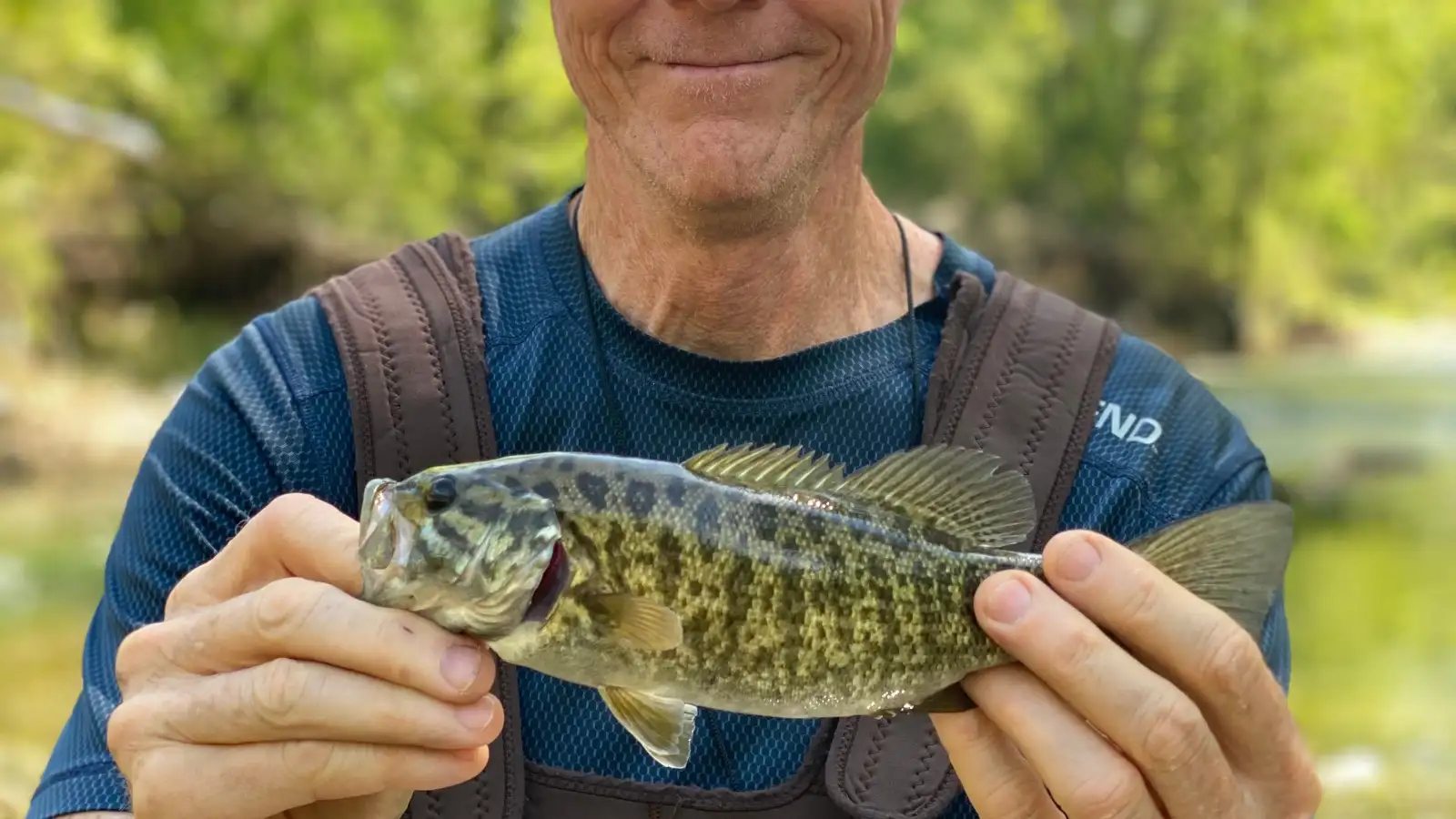
A bass lifted off its bed is a nest handed over to nobody, and the first thing a biologist registers is not the fish hanging in the air but the pale saucer of gravel left behind, still holding eggs or a thin cloud of fry with no one standing over it. On most beds that job belongs to a single fish, the male, and he does it alone: hovering, tilting, chasing off anything that drifts into the circle. Lift him out and a clock starts, because bluegill, pumpkinseed, crayfish, and every other raider on that flat only need to notice that the seat is empty. How long it takes them, and what is left when he comes back, is the whole story.
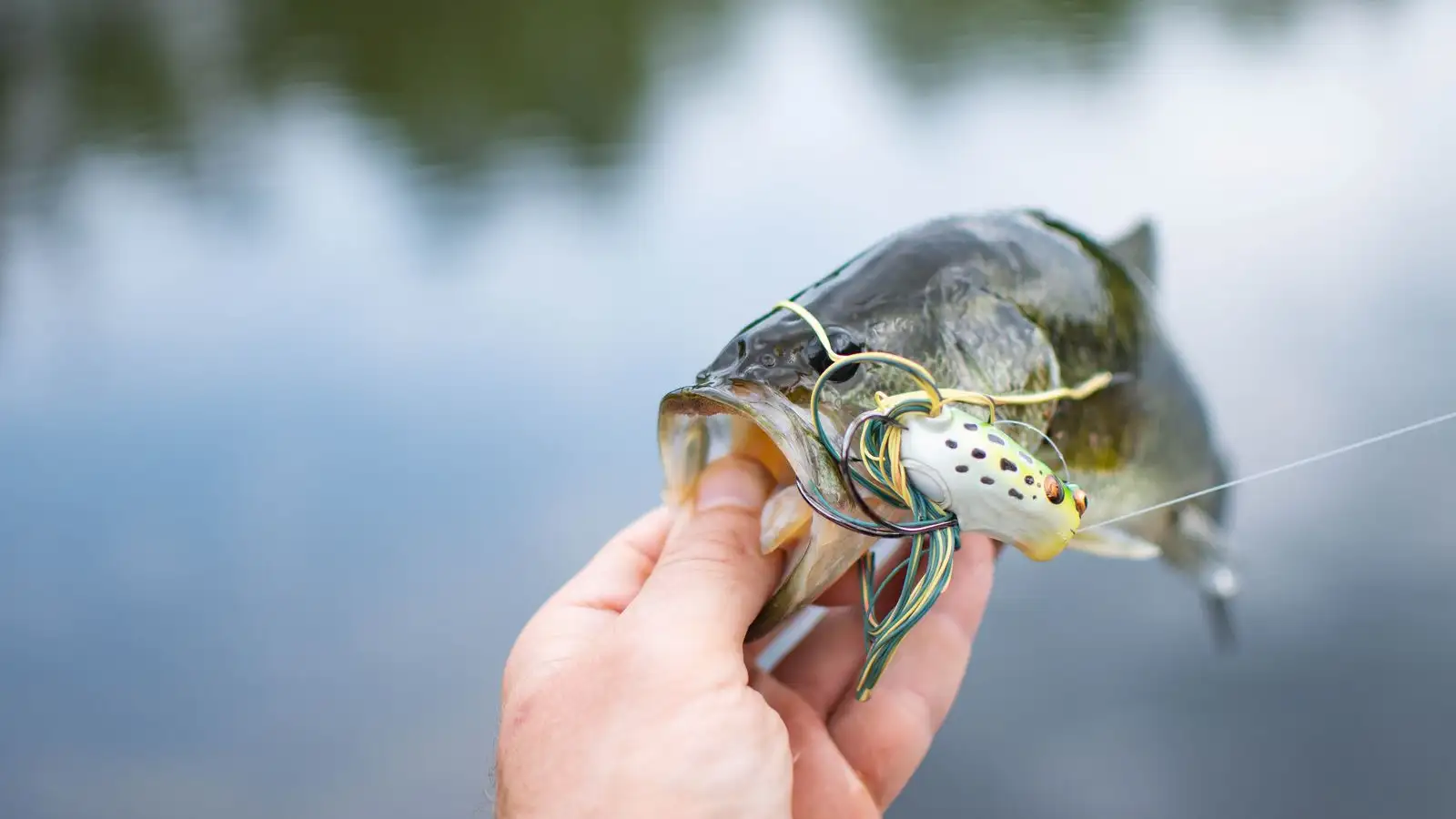
I've spent enough May mornings squinting through polarized lenses to know how that story usually reads. From thirty yards off, a spawning flat gives itself away as a run of bottom that looks a shade lighter than everything around it, like someone spilled sand into the weeds. Get closer and the shapes sort themselves out: a dark oval hanging in the water, and under it a circle maybe two feet across, swept clean, brighter than the surrounding silt because he has been fanning it with his tail for days. His tail never really stops. That's the detail I notice first now, before anything else, because it tells me he isn't resting. He is working.
Then you drop something into his territory and he does exactly what the nest requires of him, which is to face the intruder and deal with it. He doesn't run. He tips forward, comes back to the same saucer after every pass, and hits the thing that fell into his yard because it's in his yard. If you're new to it, that first fish is almost startling. He'll eat again on the next cast. And the next. You can stand in one spot and work the same male three or four times before he finally quits.
That's the part I want to slow down, because it's where most of the damage happens quietly.
What the fight costs, and what you can't see while it's happening
The strike isn't the expensive part. The fight is. From the moment he's hooked to the moment he's in your hand, that male is not on the nest. Not hovering over it, not chasing raiders off it, not fanning water across the eggs. On a warm afternoon in shallow water, a hard fight on light line can run longer than most anglers realize, and warm water is the worst time for it. The fish is already running on a narrow energy budget that spawning built for him: he's been eating less, holding a fixed position, defending a perimeter. Heat raises his metabolic cost and lowers how much oxygen the water can carry at the same time. Handling on top of that is an added cost, not a neutral event, which is the plainest way I know to say it. He's not just stressed in the vague sense people use at the ramp. He's been pulled out of a job he can't delegate.
The nest has one employee
This is the fact that changes how I fish, and it's the one most casual spawn-season conversation skips. Bass nesting is not a two-parent operation. The female shows up, drops the eggs, and leaves. The male stays, and everything that happens to that clutch after the spawn depends on him being physically present over it.
So while he's on your line, the nest is an open door. Sunfish work the edges of a bed the way sparrows work a picnic table, and they don't need much of an opening. Crayfish come up from the bottom and take eggs off the gravel at night and in low light. If the nest holds eggs, a short absence can mean a lot of them gone; if it holds fry, the calculation is different but no gentler, because fry that scatter into open water are not something a male can gather back up. Once they've spread, they're spread.
That said, I don't want to oversell the certainty here, because biology is not that tidy. Sometimes the male gets released, drops straight back onto the saucer, and resumes like nothing happened. Sometimes eggs that sat unattended for a few minutes still hatch. A single lost nest is also not the same as a lost year class, and this is exactly where the size of the water matters. On a big reservoir with thousands of beds spread across miles of shoreline, one raided nest is a rounding error. On a small pond where you can count the spawning males on two hands, each nest is a larger piece of the whole picture. That difference is real, and anyone who tells you the answer is the same everywhere is selling something.
Easy fishing, fast arithmetic
Here's what makes this an actual dilemma instead of a simple rule: the spawn is the easiest time of year to catch bass, and it's not close. Bed fish hold in one spot, they strike defensively, and they come back after you miss them. A competent angler can work a flat in a couple of hours and handle a dozen fish, or two dozen, without moving the boat much. The catch rate is high and the effort is low, which is a combination that gets people onto the water in May.
That's also why fisheries biologists tend to frame bed fishing as a trade-off rather than a yes or no. The pressure isn't evenly distributed, the outcome isn't uniform, and the same act on two different lakes can mean two different things. On some waters, anglers have decided among themselves to leave spawning fish alone, and that's a voluntary choice made by the people who fish there, not a rule handed down from anywhere. I've fished water where the spawn gets pounded and water where nobody touches a bed until June, and both felt defensible to me for different reasons.
The choices, without the sermon
The two costs you actually control are time off the nest and time out of the water. Everything else is noise. If I'm going to fish a bed, I've already decided before the cast that the fish comes in, gets unhooked with him still wet if I can manage it, and goes back. No long measuring session on the deck. No holding him up while I find my phone. If the camera comes out, the camera comes out fast, or it doesn't come out. Those are choices, not requirements, and I've never once regretted skipping the picture.
What I do after the release matters as much as the release. Standing over the bed and casting again is the worst version of the whole exercise, because you're keeping that male in a loop of interruption with no chance to settle back onto the saucer. When I've got a fish off a bed, I move. Get the boat off the flat, get some distance, and let the spot be quiet. That single decision gives the male the one thing he needs to salvage the nest, which is the chance to get back on it before anything else does.
And sometimes the honest answer is to leave the bed alone entirely, especially on the small water where the nest count is low and you know it. That's not a rule and it's not for everyone. It's just arithmetic you're allowed to do.
The last thing I'll say about what happens when an angler lifts a bass off a bed is that I rarely get to see the ending. I release the fish, I put the boat down the bank, and the saucer is behind me. Once or twice I've glanced back and caught a dark shape sliding into the circle again, tail already moving. Mostly I don't. What I do know is that the gap between him leaving the nest and him getting back to it is the part I control, and I try to keep it short.