The bass on that bed doesn't know it's being released. It just knows it's fighting to survive. When an angler pulls it from its nest, that moment borrows a future the fish has already invested everything in. Catch-and-release isn't a gift—it's a debt that only gets paid if the fish returns strong enough to guard its eggs. The goal is bass tomorrow, not just today, and that begins by seeing the world from the fish's side of the water.
What the Fish Has Already Spent Before You Cast
A bass on a spawning bed is running on empty. It has eaten little in days, parries bluegill and pumpkinseed raiders around the clock, and funnels every remaining calorie into reproduction. When the hook sets, a cascade of physiological debt begins. Muscle glycogen burns off during the fight, lactic acid accumulates, and lifting the fish into air dries gill membranes in seconds—even before a photo is taken. Meanwhile, every minute the bass is gone, its eggs or fry become an open buffet. The whole picture rests on three forces: how long the fight lasts, how the fish is handled out of water, and how quickly it gets back on the bed. If those three are managed with the fish's next spawn in mind, the release means something. If they're ignored, the bass may swim off only to die later, leaving nothing behind.
The Bed Release Protocol: A Sequence That Pays the Debt
What follows isn't a set of rules—it's a way of thinking that places the bass's next season ahead of the angler's excitement. Each stage builds on the one before it. Skipping a stage doesn't save time; it steals the future the release was supposed to protect.
Step 1: Read the Water Before You Read the Bite
Not every light patch on the bottom is a nest, and not every nest holds a bass ready to strike. The first move is to pause and read the scene. Look for saucer-shaped cleanings in sand or gravel, often tucked near laydowns or grass. A female may have come and gone; the male is the sentinel. If a bass charges at intruders and returns to the same spot, that's the fish. Notice whether the bed sits in shallow, crystal-clear water where the fight will draw sunfish instantly. Are there multiple beds close together? Disturbing one can unravel a whole colony. When conditions stack against the fish—high water temperatures, low oxygen, a parade of boats—the clearest ethical choice might be to paddle away. The most successful release is the fight you never had.
Step 2: The Fight Belongs to the Fish, Not the Angler
Bed bass strike out of territorial fury, not hunger. They don't make long runs. The fight should match that truth. Choose tackle heavy enough to end it quickly—a medium-heavy spinning or baitcasting setup with 12- to 15-pound line gives the angler instant control. Light finesse rods only prolong the struggle. Keep steady pressure, and bring the fish to hand before it rolls on its side. Once the bass loses its upright posture, the lactic acid costs have already climbed too high. The goal is to have the fish back hovering over its nest within two minutes, not ten.
Step 3: Hold It Like the Water Holds It
Dry hands, cotton gloves, a jaw grip that dangles the fish—each strips the protective slime and strains internal organs. The slime coat is a fish's immune armor; once it's gone, fungal infections find a doorway. A vertical hold, even with wet hands, can dislocate the jaw of a larger fish or compress its organs. Instead, land the bass with wet palms or a rubber-mesh net. Keep the body horizontal and fully supported—one hand under the belly, the other gently steadying the lower lip, never letting any part hang. If a photo matters, take it in seconds, with the fish just above the water and no drier than a wet handshake. The measure of a good hold is that when the fish returns to the water, its slime coat is still gleaming and its body shows no strain.
Step 4: Let the Fish Tell You If It's Ready
A bass that is too stressed won't bolt for the bottom. It might roll, sink, or gulp at the surface. Before the release, watch for gill covers moving in shallow, ragged beats, a failure to right itself when cradled, or a washed-out pallor that signals exhaustion. Those signs are the fish's way of saying it needs more time. They're easy to miss in the excitement, but missing them turns a release into a gamble. A fish that tenses its body the moment it touches water, fins spreading, ready to launch—that's the signal. That fish will be back on its bed in a minute, not floating belly-up behind the boat.
Step 5: Give the Fish the Time It Needs, Not the Time You're Willing to Give
To revive, hold the bass in the water column, horizontal, facing into any current or gently moving it forward so water flows over the gills. Don't pump the fish; let the current do the work. Watch the operculum—the gill cover—until its rhythm steadies. When the bass begins to kick against your hand, it's telling you the debt is paid. Let go when the fish leaves on its own power, not when your patience runs out. That's the difference between a release that looks good and one that actually works.
Morning on the Flats: How the Protocol Plays Out in Real Time
An angler working a clear Ozark lake from a kayak spots a smallmouth fanning a nest in three feet of water. Bluegill hover nearby. Water temperature sits in the upper 60s, no other boats in sight, and the bass charges every shadow that drifts near—a sign it will defend aggressively. Applying Step 1, the angler notes the bed's isolation and the fish's commitment. The conditions are favorable. A jig is pitched beyond the bed and dragged in with short hops; the bass engulfs it instantly.
Step 2 kicks in: the angler keeps the rod loaded and reels fast, bringing the fish to hand in under a minute. He dips his hands in the lake before touching the bass, cradles it horizontally, and removes the jig with pliers while the fish stays half-submerged. A quick photograph at the water's surface takes three seconds, never lifting the bass higher. Then he lowers the fish into the shallows. The smallmouth's fins flare, its gills move in a deep, steady rhythm, and after a five-second pause, it rockets straight back to the nest. The whole encounter—cast to return—lasted less than three minutes. That bass is guarding eggs again before the bluegill even notice it was gone.
Where Good Intentions Slip: The Three Breaks in the Protocol
Stretching the Fight Because It Feels Rewarding
A strong, short fight doesn't give the same adrenaline spike as a drawn-out battle. The urge to let the fish run, to feel it surge again, is honest. But a spawning bass pushed past its aerobic limit often doesn't recover, even if it swims away. The cost is a male removed from the gene pool and an entire brood that becomes a meal for scavengers. When excitement overrides the fish's reality, the release becomes about the angler, not the fish.
The Vertical Jaw Hold—A Picture That Costs More Than It Captures
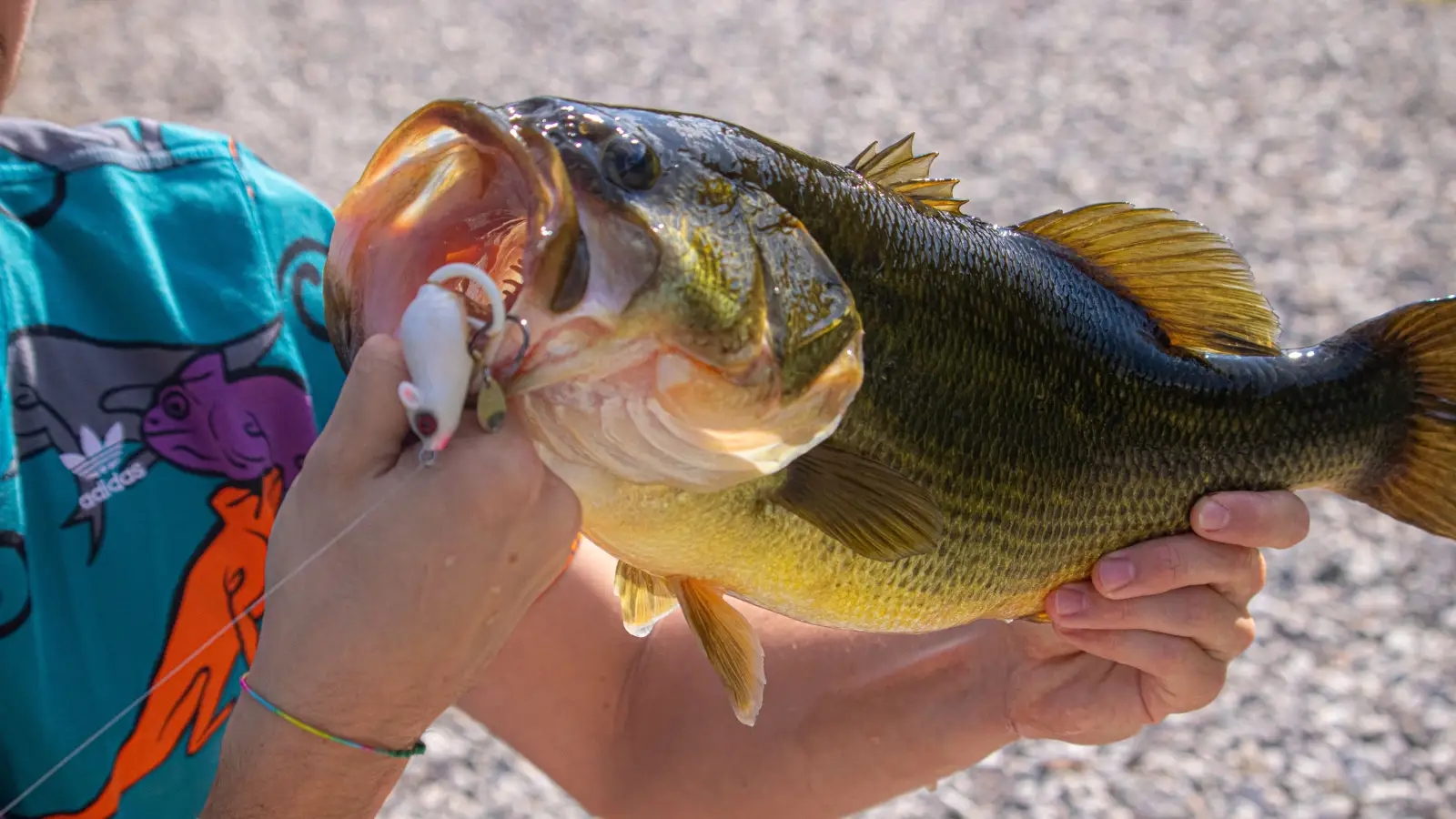
The hero shot with a dangling bass is the most common misstep on beds. A vertical hold strains the jaw, can displace internal organs in bigger fish, and often happens with dry hands or a dry towel that wipes away the slime coat. Even a fish that swims off might later develop an infection or struggle to feed. Wet hands and a horizontal, full-body cradling keep the fish intact. No photograph is worth a slow death.
Skipping the Revival Because the Fish Looks Fine
After unhooking, it's easy to toss the bass overboard and pick up the rod again. But a fish that sank awkwardly or gulped air needs a moment to reorient. Without that check, a lifeless fish can drift out of sight. Thirty seconds of patient cradling, watching for the kick, costs nothing and guarantees the fish is ready to defend its home.
Quick Reference: The Bed Release Protocol at a Glance
| Stage | Goal | Key Action |
|---|---|---|
| Know the Bed | Avoid unnecessary stress on vulnerable fish | Identify bed, guardian sex, colony density; consider skipping |
| Fight Fast | Minimize lactic acid buildup | Heavy tackle, short fight, land within 2 minutes |
| Handle Wet & Horizontal | Protect slime coat, internal organs | Wet hands, cradle belly, no vertical hold |
| Read Stress Signs | Decide if revival is needed | Look for labored gill movement, inability to right itself |
| Revive Patiently | Return a strong, alert fish to the bed | Face into current, watch for kicks, release when ready |
Frequently Asked Questions
Is it okay to fish for spawning bass at all?
In many places it's legal, but legality isn't the only measure. Done with extreme care and an instant release, a bed fish can recover and resume guarding. The deeper question is whether the conditions—water temperature, boat traffic, the fish's own condition—allow a safe return. When the odds are stacked against the bass, the stronger choice is to leave the bed alone.
How long can a bass survive out of water?
Gill membranes start drying within seconds. Thirty seconds out of water is dangerous; one full minute can be fatal, especially in warm air. Every moment the fish is in air counts against its recovery.
What's the best time of day to fish beds for the least stress?
Early morning or overcast days keep water temperatures lower, reducing the fish's oxygen demand and stress load. That wider margin makes every subsequent step of the protocol easier.
Can I use a livewell to transport a bed fish?
No. Removing a bass from its nest, confining it in a livewell, and releasing it at a different location disorients the fish and leaves the eggs undefended. Every bed fish should be returned to the exact spot it came from.
The Debt You Pay Forward
The Bed Release Protocol turns good intentions into a future fishery by controlling fight time, handling, and revival with the fish's next spawn in mind. Start with Step 2—most preventable mortality traces back to a fight that lasted too long. Reach for heavier gear tomorrow morning, give that bass back to its bed, and let it finish what it started.