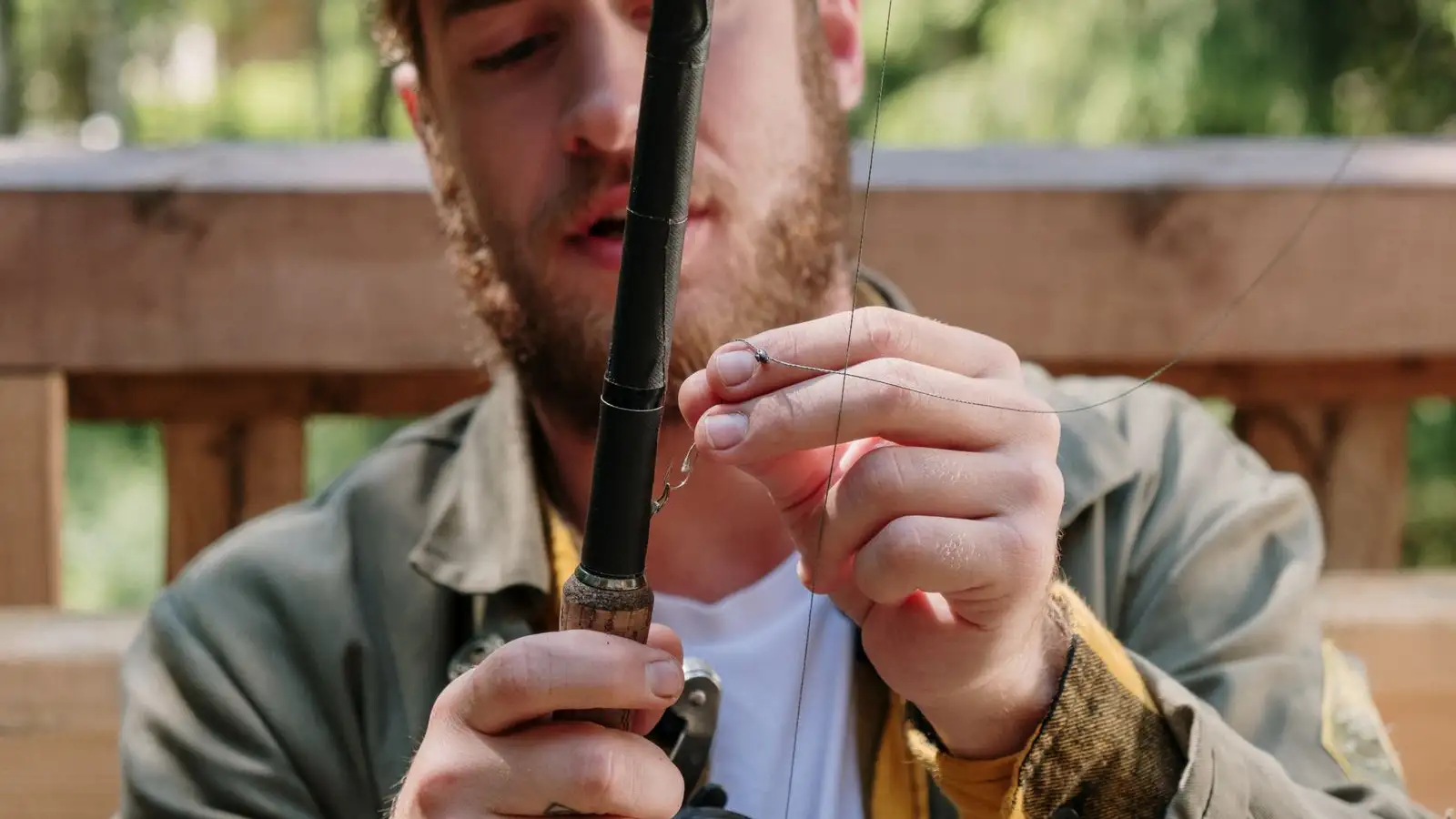
Three things get checked before any weight goes on: how fast the current is moving through the seam being fished, how deep the water runs along the path the bait will travel, and how much line is sitting in the water between the rod tip and the rig. Weight is matched to current speed and depth, never to the cover being fished. The lead length gets tuned so the bait swings into the seam instead of past it. And the check that overrules the other two is whether the rod tip can still feel bottom, because a rig that has lost contact turns a take and a snag into the same sensation.
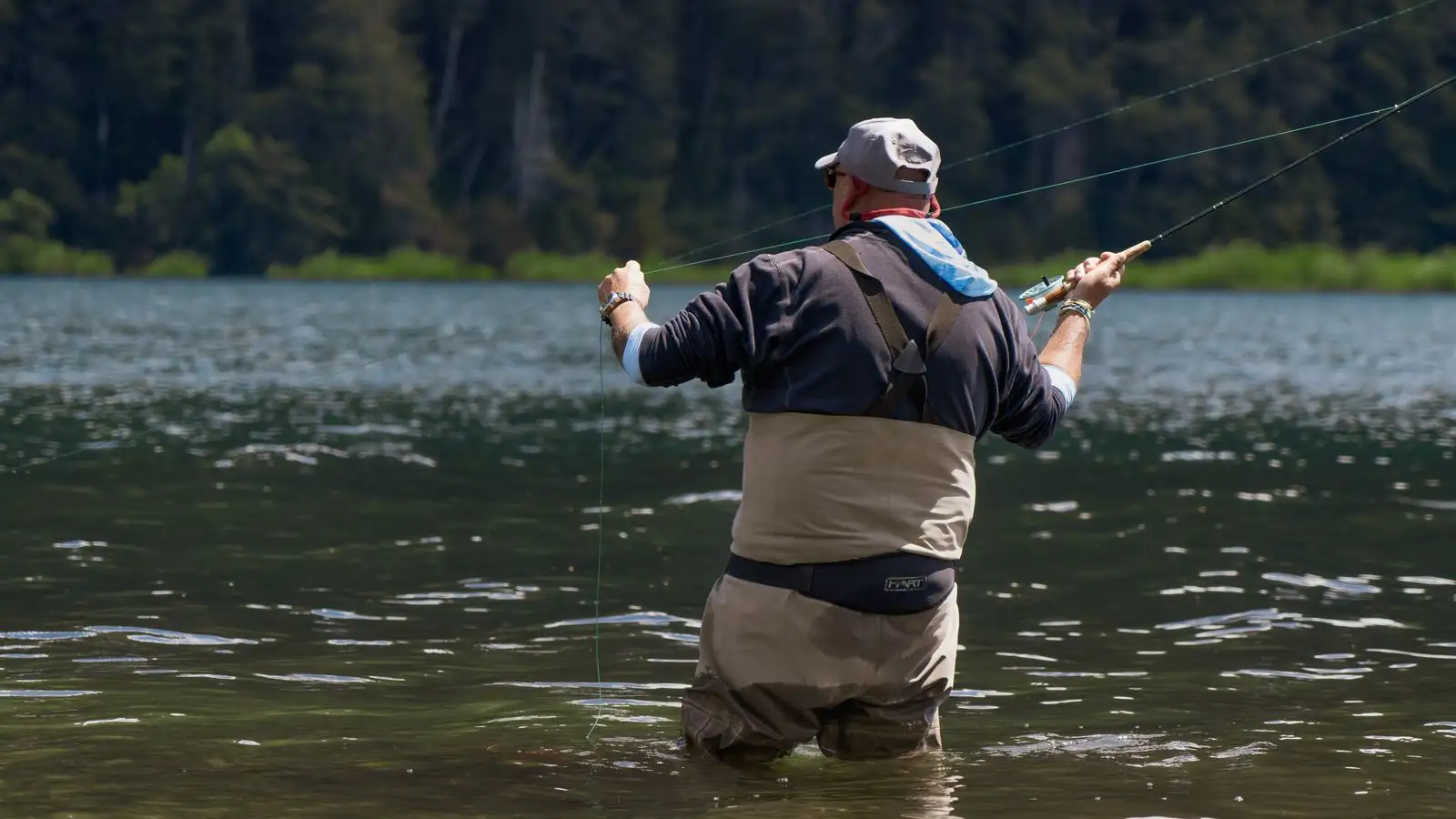
The bow is the first thing I read, and I read it before I open the box. Stand at the head of a run, drop the rig in on a short line, and watch what happens between the rod tip and the water. Moving water turns any line into a sail, and monofilament is a wide sail for its strength. Heavier line catches more current, lighter line catches less, and that single fact is most of the reason the weight needed to hold bottom climbs as the current speeds up and the water deepens, then drops back when the line diameter drops. Same seam, same bait, one step down in tippet size, and a rig that was ticking along the rocks starts planing downstream like it's on a leash.
I quit guessing at that a long time ago. I lower the rig in and watch. If the line bows hard and the rod tip pulls into a downstream curve before I've fed out any slack, the water is moving faster than the weight can answer. If the bow stays shallow and the rig drops near-straight, I'm probably carrying more lead than this piece of water needs, and I'll feel it in the drift before I feel it in my hand.
Depth does the same work as speed, just more quietly. Two feet of water and four feet of water at the same surface speed are not the same problem. The deeper column puts more line in contact with more water, and every extra inch of line in the current is another inch the current can push on. When I move from the tail of a riffle into the throat of a pool, I expect to add weight even though the surface looks gentler there. That's the part that fools people. Fast shallow water and slow deep water both want more lead than they appear to.
The swing is what decides how much is too much
Weight that's a little light just means a slower drift. Weight that's heavy is worse, because it changes where the bait goes, not just how fast. A bait dragged behind an oversized sinker gets pulled down and held, and the line above it belly out downstream. The bait gets levered sideways out of the feeding lane and ends up swinging through water the fish aren't using, on a track that looks like the drift but isn't. I've watched it happen on a clear run, the sinker ticking along the same rock every cast while the bait swept a foot and a half to the outside of it. Nothing ate. Nothing was going to.
The fix isn't always less lead. A lot of the time it's a slower drift, which keeps the bait hanging in the strike zone longer and lets the current do less to it. When I'm between sizes, I'll go lighter and manage the extra hang time with the rod rather than add a sinker and give up the lane.
Where the weight rides, and what it rides on
This is why I keep three-way swivels in the boat. A three-way swivel lets the weight ride on one short line while the bait trails on a longer one. The sinker does the bouncing and the searching, feeling its way along cobble and ledge, and the bait stays free above and behind it on a leader that isn't being dragged down by the lead. Two jobs that fight each other get separated: contact and presentation. You can fish a heavy sinker and still have a bait that moves like it weighs nothing.
The dropper length is the dial on that rig, and I tune it more often than I change sinkers. Short dropper, and the bait rides tight to the bottom behind the weight. Long dropper, and the bait swings up and out, downstream of the sinker, more free but also more exposed to whatever the current wants to do to it. The trick is finding the length where the bait swings into the seam instead of sailing past it. I shorten it a notch at a time when the bait is riding too high. I lengthen it when I'm ticking bottom constantly and the bait is buried in the rocks behind the sinker.
When I don't want a swivel in the rig at all, I split the weight instead of stacking it. Smaller shot spread along the line lets the leading shot reach bottom first, then the next, then the next, so the rig settles in stages rather than slamming down as one lump. That stepped fall gives the bait a softer entry and more control over where it ends up. One big sinker drops like a stone and drags the bait straight down with it. Four small ones let the bottom come up to meet the rig, and the bait lands where it was supposed to land.
Rod tip height is part of the weighting decision
How high I hold the rod tip controls how much line sits off the water, and line off the water is line the current can't push. Raise the tip and the rig tracks straighter, holds a tighter line to the bottom, and needs less lead to do it. Drop the tip and I'm feeding line into the current, letting the rig drift and swing, which is what I want when fish are spooky and the drift has to look natural. So the same rig fishes heavy or light depending on where my hand is. Before I add a split shot, I check whether a foot of rod tip would have done the same job for free.
Then you stop, and you feel
All of that is preparation for one confirmation, and it only comes through the rod. I want the bottom talking to me in a steady rhythm. Gravel gives a fine chatter. Bigger rock gives an irregular tap-tap through the cork. Sand or silt gives almost nothing, which is its own kind of information, because in that water I'm reading the drift speed instead of the texture.
The moment the chatter stops and the rod tip just sits, I don't set. I lift, slowly, and see which it is. A snag has weight that doesn't move and doesn't answer. A fish has weight that moves, and it usually moves against what I'm doing, with a little life in it. A take is a change in the rhythm of the bottom, and you can only catch a change if the baseline was there to begin with. That's the whole reason I care so much about feeling lead on rock. If I can't feel the bottom, I'm not fishing a rig, I'm fishing a hope. I'd rather add weight and lose a little drift than fish blind, and on most days the water gives me a middle option: a slightly shorter dropper, a slightly higher rod tip, and enough lead to keep the conversation open.
It depends, always. Cold, heavy, deep current wants lead, and it wants it in a shape that still lets the bait move. Skinny water over a shelving flat wants almost none, and wants it spread out. The one thing that never changes is the order I do it in: read the bow, judge the depth, decide how the weight rides, tune the length, then put my hand on the rod and listen to the bottom before I decide anything else.