A topwater rod and reel have one job between them: keep treble hooks pinned from the strike until the fish is in your hand. The rod does that by bending deep enough that head shakes and boat-side surges arrive at the hooks as a steady pull instead of a shock. The drag does it by giving line smoothly at the exact moment the rod is already maxed out. The line does it by adding or subtracting stretch so the other two pieces never have to cover ground they can't. A moderate or moderate-fast rod with a smooth, moderately set drag will land more topwater fish than a stiffer, faster setup will, and almost anything already sitting in a garage can be tuned into that role once the function of each piece is clear.
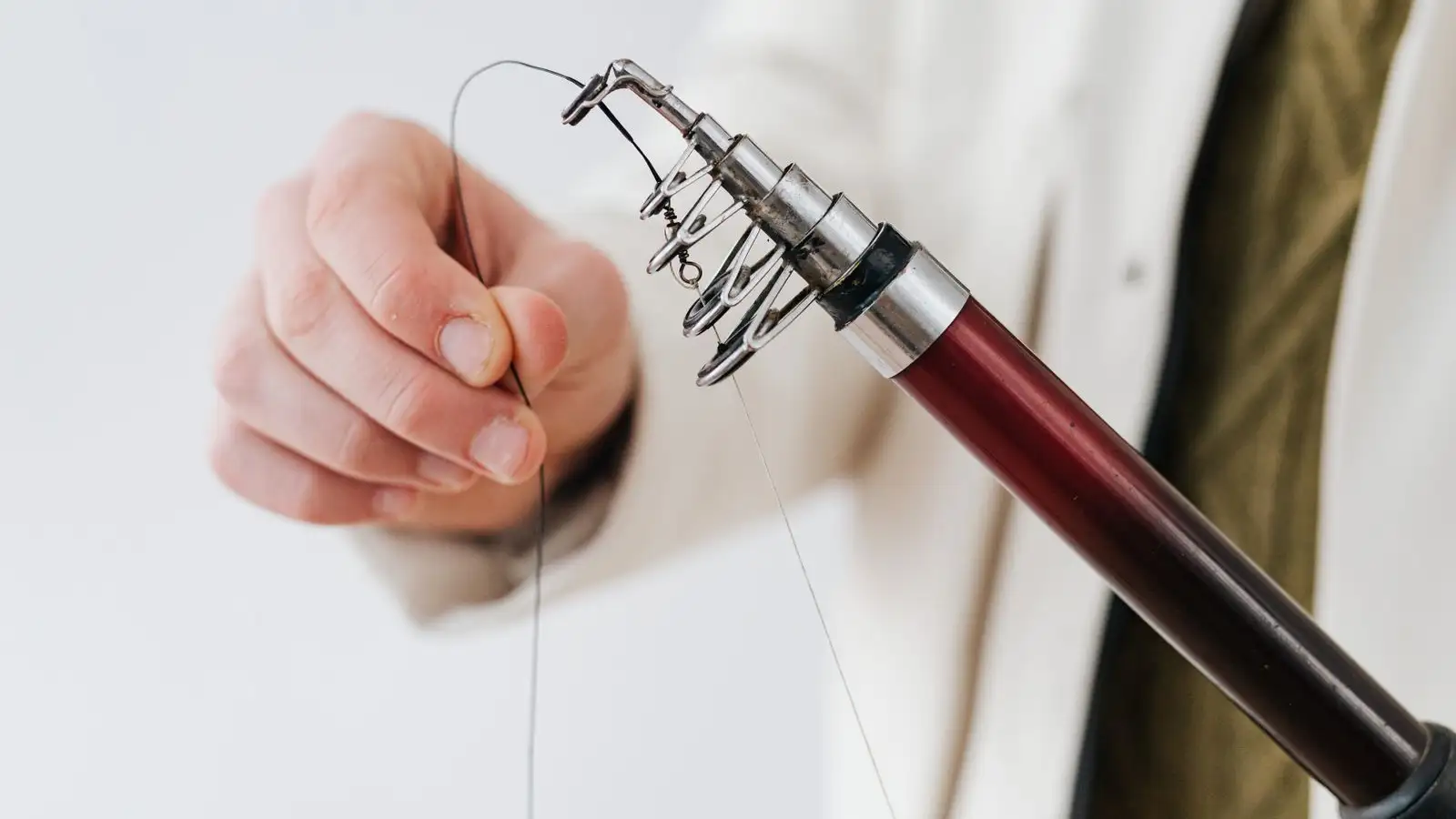
It's the last twenty minutes of light on a shallow flat, the water still holding the day's heat, and the bait is walking over the edge of the pads. Twitch, clack. Twitch, clack. I hand you the rod because you haven't thrown topwater much. "Just walk it," I say. "Don't do anything else." Third cast, a fish blows up under it like somebody dropped a cinder block off the dock, and everything that happens in the next four seconds is decided by the gear in your hands, not by how hard you swing.
Here's the part nobody tells a beginner: by the time you feel the weight, the fish is either hooked or already lost. The tackle either delivered that strike as a rising pull or it delivered it as a pop, and no technique on earth fixes a setup that's built to pop hooks out. So let's go through the three springs in your hands and what each one is really doing.
The Rod Is a Spring, Not a Stick
Action and power get used interchangeably by beginners, and they are not the same thing. Power is how much load it takes to bend the blank all the way down. Action is where it bends. An extra-fast rod puts nearly all of its bend in the top few inches. A moderate rod carries the curve past the middle of the blank.
Treble hooks are short, thin wire. They don't bury the way a single worm hook does into soft plastic. They hold because the line stays tight and the load stays steady. Anything that makes the load spike, a fish rolling its head at the surface, a run that hits the wake of the boat, you sweeping the rod when the fish is already close, puts a momentary jolt on a hook point that's holding maybe a few millimeters of tissue. The hook doesn't pull because the fish is strong. It pulls because for a fraction of a second, something in the chain was too stiff.
A moderate rod turns that spike into a longer, lower curve. The tip keeps traveling, the fish's roll gets eaten by the blank instead of by the hook hole, and the deep bend keeps the line loaded while the tip is on its way back. That last part is the one that actually saves you. Sharp tips unload fast, and slack is where treble hooks come out.
The same bend governs the hookset. You've heard "swing like you mean it." On a bait with two or three trebles, a hard sweep with a fast rod arrives at the hook as a shock. You want the same result delivered as a pull, not a wall. A moderate blank lets you swing hard and still hands the hook a load that rises instead of a load that appears.
If you already own an extra-fast rod
Don't run out and buy anything. Turn the drag down and let the line choice do the shock absorbing. That's the whole adjustment. What you can't do is keep the fast rod, spool braid, lock the drag, and expect the hooks to stay in.
One more thing about power, because it gets ignored: match the rod to the weight of the lure, not to the fish you hope to catch. A rod too heavy for a light walking bait won't load, and the tip won't flex enough to feed the bait slack, so the lure won't walk properly. A rod too light loads all the way down and loses its snap-back, which is what gives the bait its swing window after each twitch. Both of those are casting problems that turn into hookup problems.
Gear Ratio Is About Slack, Not Power
When a fish eats a walking bait, it's usually chasing toward you. That means after the strike, the slack is on your end of the line, not the fish's. Slack is the only thing you can't fix after the fact.
Gear ratio, practically, is inches of line recovered per turn of the handle. A faster reel gets that slack back while your rod hand is busy. In open water over a flat or off a point, that pick-up is what earns the strike. In heavy pads and grass, the lower ratio earns its keep because you need the winching torque more than you need the speed.
But be honest with yourself about how much of this is the reel. Most missed topwater fish are missed because the angler never got the slack out, and the rod tip is what gets it out. A fast reel buys you a fraction of a second. It doesn't buy you a bad habit.
The Drag Is Not For Fighting Fish
The drag has a reputation as the thing that tires a fish out. On topwater, its real job is at the boat. The fish sees you, turns, and the load spikes. The drag gives, and the hooks survive.
The physical detail that matters is that it has to give smoothly. Any drag has a break-free tension (what it takes to get it moving) and a running tension (what it takes to keep it moving). On a neglected or worn drag, there's a gap between those two, and that gap is a spike. That spike is what pulls hooks.
So before your first cast, back the drag all the way off until it's slack, then bring it up slowly while you pull line off the spool by hand. Feel for the stutter, the catch, the little gravelly pop. If you feel one, work the drag back and forth until it goes away. At the end of the day, back it off to nothing so the washers don't take a set. The locked drag you never set is the one that costs you a fish next month.
For tightness, I want to be able to pull line off the spool with a firm, steady, hand-over-hand pull and no jerking. On treble-hook baits, most beginners are on the wrong side of that, running it tighter than they need. If the drag is slipping on the hookset, it's too loose, but that's a rarer problem than the other one.
Line Stretch Is a Setting You Can Change
Braid floats. That matters for topwater in a way it doesn't matter for anything else. A floating line stays up on the surface instead of dragging the bait's nose down on the pause, and you can strip slack off the top of the water instead of digging it out. It also cuts through grass and pads. What it doesn't do is stretch. Zero. So the rod and the drag have to be your entire shock absorber, and that's the deal you're making.
Monofilament stretches. That stretch cushions treble hooks, which is why a stiffer rod with mono on it fishes fine. The cost is that the same stretch eats your hookset at distance. On a long cast, the sweep you deliver at the rod arrives at the hook as a suggestion. You either shorten your cast, move the boat closer, or accept a lower hookup rate out there. That's the trade, and it's a real one.
The floating-line problem with fluorocarbon
Fluorocarbon sinks. On a bait that pauses, a sinking leader pulls the nose down and the bait stops walking square. As a leader right at the hook, short is fine and it can help. As a long leader, it fights you.
Braid main line with a short mono leader is where most of us land. Floating main line for slack management and vegetation, a little stretch right at the hook where the fish meets the gear. That's not a rule, it's a compromise, and it works because it splits the two jobs instead of asking one line to do both.
Match the line to the cover, the weight of the lure, and your own ability to keep slack out. Wind, backlashes, a clumsy thumb. If you can't manage slack, a stretchier line will cover for you. If you can, braid gives you better control and better feel for what the fish is doing.
What To Do With What You Already Own
Think of it as three springs in series: the rod, the drag, the line. The fish only ever feels the total. That's the concept that matters, because it means you can trade one against another instead of replacing everything.
Extra-fast rod, braid, tight drag: the combination that pulls the most hooks. Fix it by backing the drag off and lengthening the leader.
Extra-fast rod, mono, moderate drag: fine. The line stretch is standing in for the rod bend you don't have.
Moderate rod, braid, moderate drag: fine, and the most direct setup of the bunch. You feel everything the fish does, and the rod absorbs what the line won't.
Moderate rod, mono, moderate drag: the most forgiving, slightly less control at distance.
One variable people leave out entirely is how many hooks are on the bait. A topwater with a single rear hook tolerates a stiffer rod and a tighter drag, because the fish has less leverage to work with. A bait with two or three trebles is a different animal. The body of the lure becomes a handle, the front hook becomes a fulcrum, and the whole rig wants all three springs soft. Same rod, same reel, same line, different requirement, just because of what you tied on.
So the checklist before your first cast is short. Pull line off the spool by hand and feel for the stutter. Ask yourself which direction the fish will be moving when it eats, because toward you means slack. And when it blows up, let the rod do the swinging instead of your shoulder. The gear isn't there to beat the fish. It's there to keep the hooks where they started.