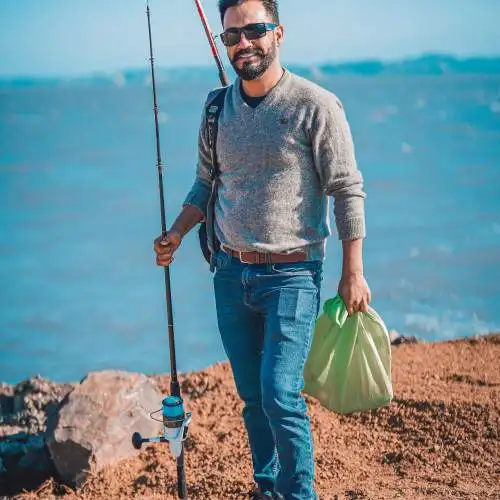
A shore rod starts costing you casts the moment its length exceeds the clear air behind your shoulder, and that ceiling has almost nothing to do with how far the fish are sitting. The bank behind you sets the first constraint. The water in front sets the second. Nearly every "all-around" rod recommendation out there was written for someone with open water on three sides, and on a bank you have open water on exactly one.
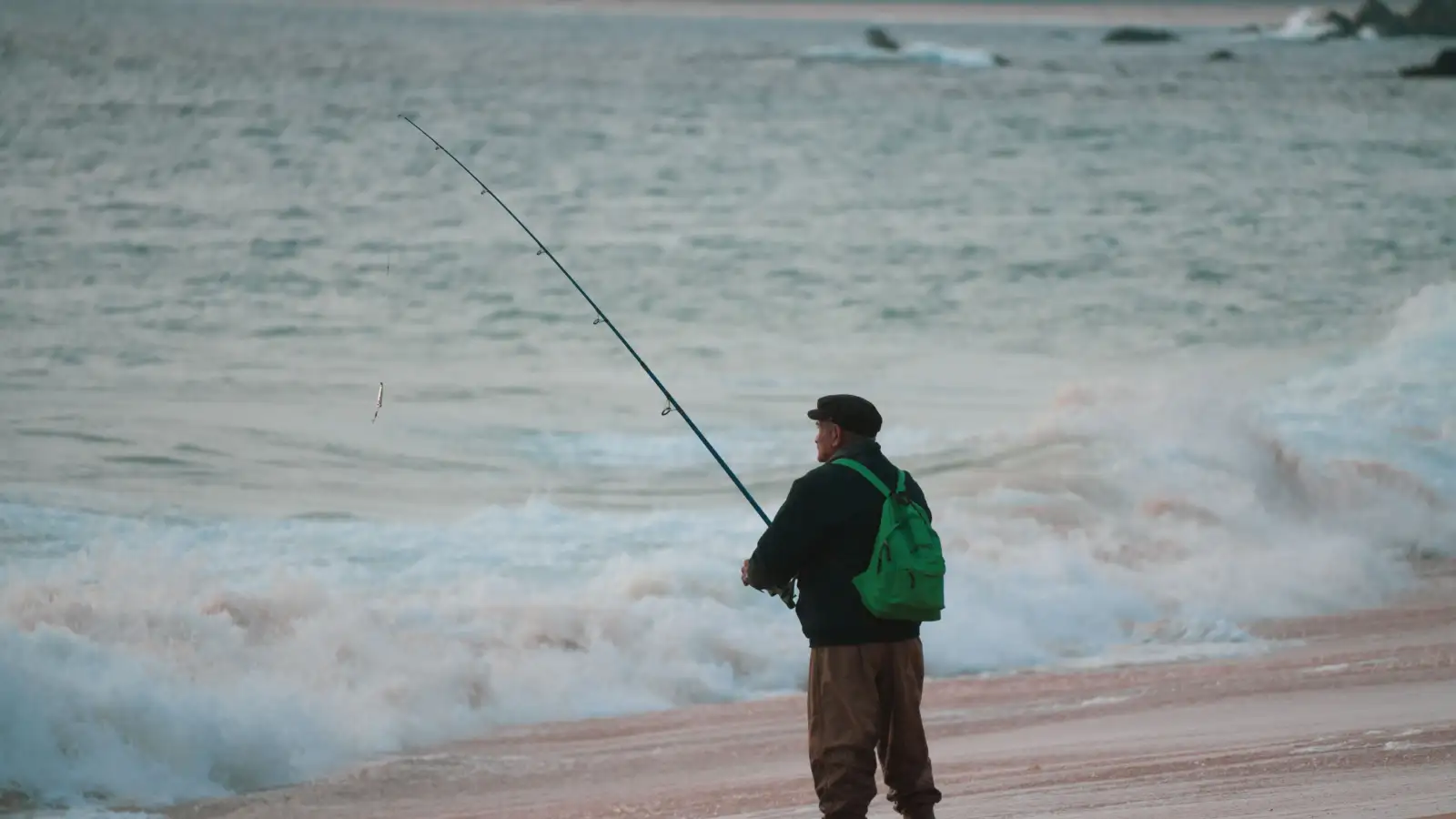
I learned that the slow way, on a riprap stretch where the fish hold twenty-some feet out and the shoreline behind you is a wall of sumac and willow.
Let me put you there. You've picked your way down the rock, you've got a topwater tied on, and there's a dark seam along the weed edge about a cast and a half out. You make the cast the way you always make it, over the shoulder, and the rod keeps traveling after the lure has already left. You hear the tick of the tip section against a branch before you feel anything. The line goes slack in a way that is not a fish. You look up. The branch that caught you is the same branch that was there this morning and will be there next week.
So you do what everyone does. You shorten the cast instead of shortening the rod. You start lobbing. The lure lands ten feet short of the seam. You try sidearm and clip the top of a buttonbush on the way through. By the fifth cast you are casting like a person trying not to catch anything, and that is where the rod is costing you. Not in a visible failure. In the number of casts that never got a fair chance to be bit.
The corridor behind you decides before anything else does
Here is how I check a spot now, and it takes about fifteen seconds. Stand where you intend to fish. Hold the rod at the angle you actually cast at, tip back and low, and look at where the tip ends up. Then add the leader and however much lure hangs below the tip. If any of that overlaps a branch, a trunk, a bank of dirt, a fence, or the tailgate of your own truck, your rod is already over budget. Brush does not negotiate.
The arithmetic is unkind in a way people underestimate. A rod, plus a leader, plus a bait dangling off the tip, eats an enormous amount of air behind you, and all of it has to be clear before you can load the rod properly. What most anglers do instead is shorten the stroke. A shortened stroke means the rod never bends into its working range, which means the lure leaves slow, which means you lose distance and accuracy at the same time. You blame your casting. The rod is the problem.
That is why the boat-advice inverse happens on a bank. On a boat, you can spin the whole platform around. Two steps and your backcast corridor is open. On a bank, you are a fixed point. Moving twenty feet might mean climbing twenty feet of loose rock or pushing through a thicket, so you don't move, and the rod has to absorb the compromise instead of you.
What length actually buys, and what it charges
Length is not free and it is not worthless. Longer rods cast farther, hold more line off the water, and give you a better angle on a hookset when you're standing above the fish. A longer rod also lets you steer a lure around a laydown by lifting line over it, and it gives you real leverage when a fish turns for deep cover and you can't follow.
All of that is true and I use all of it. What it costs is corridor. Every inch of rod has to go somewhere on the back cast and somewhere on the forward cast, and on a tight bank the somewhere is a branch.
My rule of thumb, and it is a thumb, not a law: if I have less clear air behind me than the rod is long, I go shorter. On a steep, brushy reservoir bank that usually puts me in the six-and-a-half to seven-foot range, and I have never once felt under-gunned because of it. On a wide open flat with nothing behind me but sky, I'll take the extra length all day and use it. The honest answer is that the right length is per-spot, and most people own the rod that fit the last spot they fished.
Wind belongs in this conversation too. Open banks are windy banks. A long rod with a light lure gets pushed around on the cast and bows your line once it's in the water, and a bow in the line is the enemy of feeling bottom. A shorter rod throwing a slightly heavier lure punches through wind better and keeps contact. That trade is invisible until you're trying to feel a jig on a day when the water is standing up in chop.
Power and action are two different dials
People collapse these into one word, and that is where a lot of bad rod decisions come from.
Power is how much weight the rod is built to load and fight with. It is roughly the lure and weight range printed on the blank, and it is real. A rod at the bottom of its range will not load, so you can't cast it well. A rod at the top of its range is mushy, overloaded, slow to recover, and it sets hooks poorly. Matching your lure weight and line weight to the rod's power is the single most underrated thing in bank fishing, because bank anglers carry one rod and ask it to throw a weightless soft plastic in the morning and a half-ounce bottom rig in the afternoon. No single power does both well. Pick which one you actually fish.
Action is where the rod bends. A fast action bends near the tip and stays stiff through the middle. A moderate action bends deeper into the blank.
Fast actions transmit feedback better. If you're dragging something along the bottom, feeling gravel versus shell versus a soft take, a fast tip is the difference between knowing and guessing. It also drives a single hook harder on the hookset, which matters when you're up on a bank and pulling at a steep angle.
Moderate actions are more forgiving on the cast and much kinder to treble hooks. A fast rod loads abruptly and springs hard, and that snap is exactly what tears a crankbait or a walking bait off a fish's face. A moderate rod loads gradually, casts a lob more easily, and absorbs head shakes at the net. If your bank box is mostly treble-hook lures, a moderate action will land you more fish than a faster rod with better specs.
That lob point matters more than it sounds. Under a low canopy, you are not casting, you are lobbing, and a moderate-action rod lobs. A fast rod wants a short, punchy stroke, and a punchy stroke under branches is a snag looking for a place to happen.
The half of the equation nobody mentions
The corridor behind you decides whether you can cast. What's in front of you decides whether you can land.
Standing on a bank, you have three options when a good fish digs: turn it, lift it, or walk it. Turning requires leverage, which is length and how you're holding the rod. Lifting requires a rod that can handle the fish's weight at a bad angle, which is power. Walking requires a gap in the cover you can actually reach, and a shorter rod is easier to thread through that gap once you get there.
This is where I've changed my thinking most. I used to think about the cast and nothing else. Now I look at where the weeds break, where the rock shelf drops, where I could kneel down and reach water. A fish that gets into riprap on a steep bank with a long rod and no landing plan is a fish you lose. A shorter rod you can point straight down into a gap beats a longer rod you can't control, every time.
Two-piece rods, and the ferrule nobody checks
If you're hiking to bank spots, a two-piece rod is the difference between bringing a rod and leaving it in the truck. Break it down, strap it to a pack, done. That convenience is not a compromise on the water, but the ferrule is a real thing and it's worth respecting.
A joint is a place where vibration has to cross a gap. That costs you a little sensitivity, mostly at the tip, and it's a fair price. What costs you a lot is a ferrule that isn't seated. A loose joint creaks, wobbles under load, and feels dead in your hand. Seat it by pushing together with a slight twist, look at the gap, and check it after the first few casts and after every decent fish. A joint that's starting to wear shows as a shiny ring and needs a wipe and reseat, not a wiggle and a hope.
While you're down there, look at the handle. A longer rear grip gives you a second hand's worth of room for a two-handed lob, which is the cast you'll use most under cover. A short rear grip is better for pumping a fish up a vertical bank. Neither is wrong. They're built for different banks.
What I actually do now
I walk to the water, turn around, and look. Then I ask three questions in order. How much clear air is behind me? How far do I need to reach? And where am I going to land a fish if it's worth landing?
The rod that answers those three gets the nod, even if it's the shorter, slower one that looks less impressive on paper. "All-around" on a bank means something narrower than the catalogs mean by it, and once you start fishing the corridor instead of the water, you stop losing casts to a rod that was never built for the spot you're standing on.