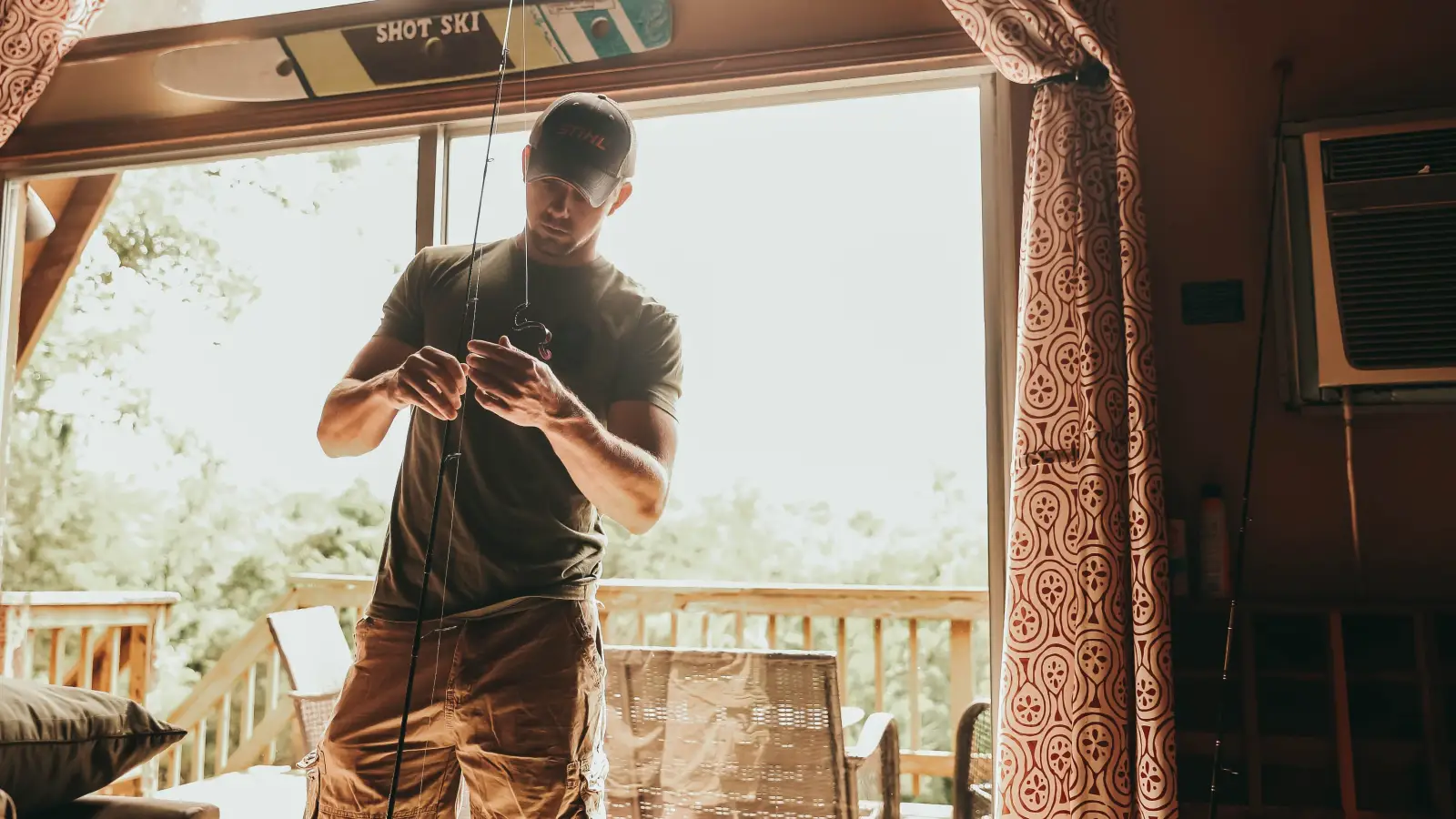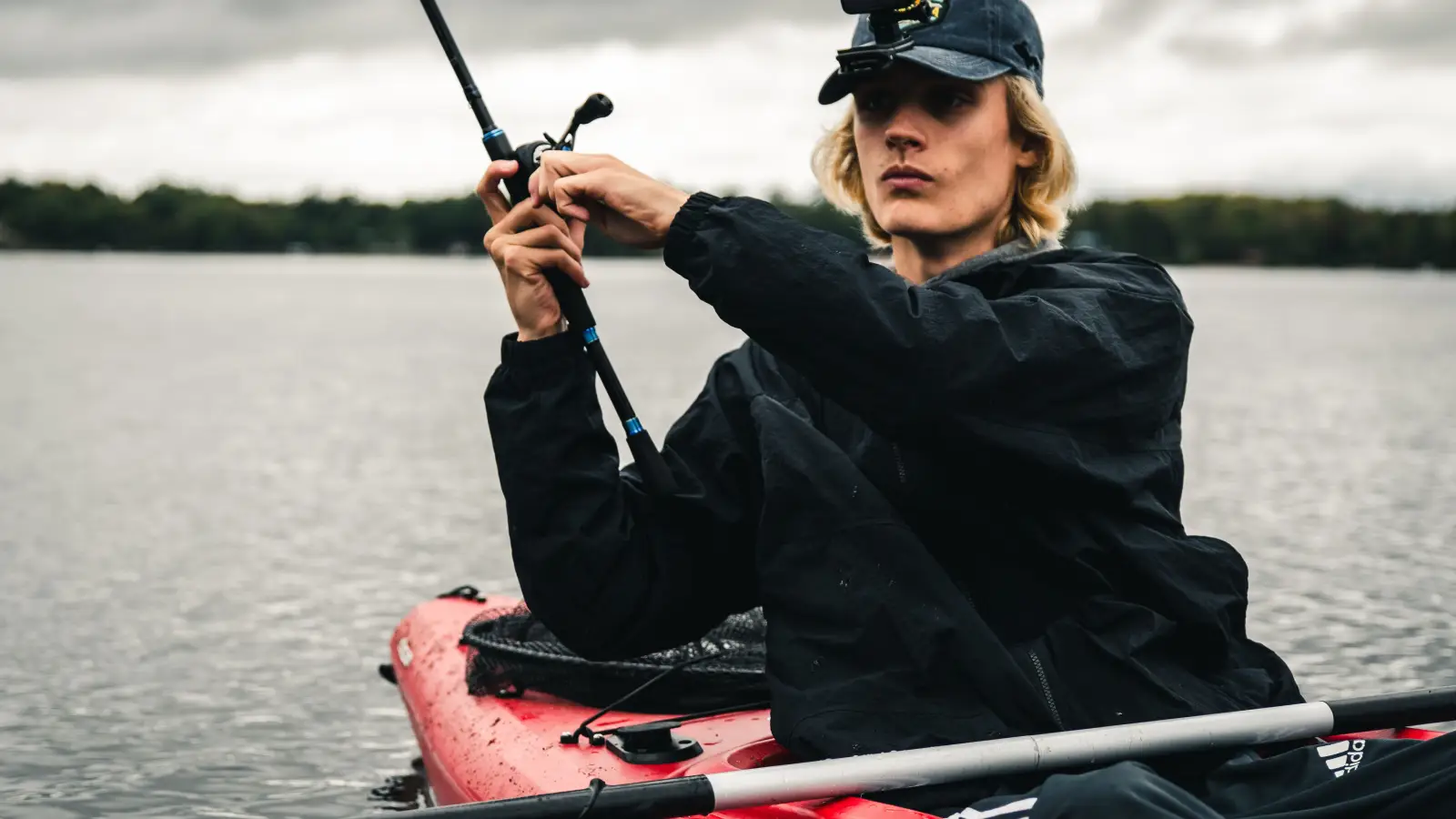
The rod length you choose controls three things: whether you’ll hit the water on the cast, how much force you can put into a hookset, and how well you can steer a fish. Those three demands look completely different from a kayak and a pier. In a kayak, sitting a foot or two above the water, any rod longer than 7 feet will slap the surface on the backcast unless you contort your stroke. On a pier 10 to 15 feet above the water, that same 7-footer forces you to stretch to clear the rail and leaves you underpowered for turning fish around pilings. This article uses the kayak and pier as opposite extremes to show you exactly how rod length alters clearance, leverage, and fight geometry—so you can pick a length that fits your platform.
Instead of general advice, we’ll compare the two platforms head-to-head to illustrate the mechanical forces at work. You’ll walk away with a three-step check for any fishing spot, whether you’re on a plastic seat or a concrete rail.
Clearance, Leverage, and the Fight: Three Ways Rod Length Changes from Kayak to Pier
Rod length directly affects how much room you have to move your rod (casting clearance), how much power you can transmit to the hook (leverage), and the angles at which you can pull on a fish (fight geometry). On a kayak, clearance is the first bottleneck: your tip has barely any headroom before it hits water. On a pier, height and open space make clearance easy, but leverage and the ability to pull fish horizontally become the real limits. Knowing which of these three is the binding constraint on each platform stops you from buying a rod that works in theory but fails in practice.
The Platform-to-Length Decision Sequence runs rod length through three checks. When you apply them to a kayak and a pier, the optimal lengths fall to opposite ends of the spectrum.
Clearance Check: Rod Length vs. the Gap Between You and the Water
On a kayak, measure from your seat to the water. If it’s 18 inches, you need the rod tip to stay at least 12 inches above the surface through the full casting stroke. A rod over 6 feet 6 inches will dip too low in a normal overhead cast. Forcing a longer rod means you have to cast sidearm or hold the rod almost vertical, which shortens distance and wears out your shoulder.
On a pier, clearance isn’t about water; it’s about the rail. Standing 12 feet up, you need to lift the rod tip high enough to clear the rail on the backcast without leaning awkwardly forward. A rod of 7 feet 6 inches or more provides that vertical reach. A short rod makes you overextend, and after 30 minutes your forearm will burn.
What “done well” looks like: you can cast comfortably with your natural motion, and your rod tip never touches anything.
The Leverage Equation: How Rod Length Multiplies or Diminishes Hookset Power
A longer rod gives you more tip speed and leverage—if you can brace it. On a pier, where you stand with solid footing and can use the rail for support, a 7-foot-6 to 9-foot rod turns into a powerful lever. You sweep the rod sideways and the butt digs into your forearm or the rail, driving the hook home with little effort. The extra length also gives you more lift when you need to raise a fish.
In a kayak, you have no solid brace. You’re seated, and your body rocks with every twitch. A rod over 7 feet amplifies that motion: the tip wobbles, and your hookset loses crispness. A rod in the 6- to 7-foot range keeps the lever short enough that a fast, compact hookset from the seated position is reliably solid. You’ll feel the difference the first time you drive the hook into a fish that would otherwise have shaken free.
What “done well” looks like: you can set a hook with authority without pulling yourself off balance.
Fish-Fighting Geometry: How Rod Angle and Platform Height Control the Fight
In a kayak, you’re at water level, so the line exits the rod tip almost horizontally. A short rod (6–7 feet) lets you point the tip straight at the water and pull sideways to steer a fish away from the kayak or structure. If you use a long rod, you’ll lift the tip high, which pulls upward—that’s fine for lifting, but it kills your ability to turn a fish quickly. That moment when a fish dives under your kayak, you need to poke the tip straight down, and a long rod makes that awkward.
On a pier, you’re high above the water. A short rod already points down at a steep angle, so you can’t flatten the line to steer a fish laterally. A longer rod lets you drop the tip toward the water while still keeping the rod butt at a comfortable height. This flatter pull is what keeps a fish from rubbing the line on pilings as you guide it to the net.
What “done well” looks like: you can switch from a flat, steering pull to a lifting pull without losing tension, no matter where the fish goes.
Putting It to Work: One Scenario, Two Platforms, Two Rod Lengths
Suppose you plan a morning kayak trip in a marsh and an evening pier session at a coastal bridge. You’re trying to decide whether to buy one rod or two.
The kayak has a seat height of 18 inches. Clearance check: a 7-foot rod smacks the water on a normal cast. A 6-foot-6 rod leaves plenty of room. Leverage: seated, you can solidly set a 3/0 circle hook with the 6-foot-6 without lurching forward. Fight geometry: you can point the tip at the water’s surface and pull sideways to steer redfish away from oyster bars.
On the pier, 12 feet up with a 3-foot rail. Clearance check: the 6-foot-6 forces you to raise your elbow high to clear the rail; a 7-foot-6 clears it comfortably with a relaxed arm. Leverage: standing, you use the 7-foot-6 to sweep sets on mackerel at 60 yards without straining. Fight geometry: you drop the 7-foot-6 tip low to keep a cobia from cutting the line on barnacle-covered pilings.
The decision sequence points to two rods. If you must pack one, choose a 7-foot medium. It will be slightly too long for the kayak (requiring a sidearm cast in tight quarters) and slightly too short for the pier (less leverage and tip clearance than ideal), but it’s a livable compromise. That’s the real cost of trying to do both with one rod.
Three Mistakes that Shortcut the Decision Sequence
Ignoring Clearance Until You Hear a Splash
The most common mistake is walking onto a kayak with the same 7-foot-6 rod you use on the pier, assuming “longer casts farther.” On the first hard backcast, the tip hits water, kills the cast, and spooks any nearby fish. The cost isn’t just one splashed cast—it’s a day of altered, inefficient strokes and a sore shoulder. Always test clearance on dry land first, with the rod you plan to use.
Underestimating the Leverage Gap from a Kayak Seat
In a kayak, you can’t lean back and drive a hookset like you can standing. A rod that feels powerful standing up can feel mushy when you’re seated. If you buy a rod based on its rated power without accounting for how length interacts with a seated stance, you’ll miss hooksets—especially with circle hooks that need a solid, deliberate push. Test your hookset motion seated before you commit.
Treating a Long Pier Rod as a Universal Problem-Solver
A 9-foot rod on a pier throws a mile and has leverage for days, but it’s a liability if the pier ceiling is low or you have to maneuver around other anglers. Clearance matters on piers, too—overhead obstruction can restrict tip lift. And that length becomes a negative if you ever bring it into a kayak for a mixed trip. The decision sequence doesn’t say “longest possible”; it says “long enough for your clearance and leverage needs.”
Quick Reference: Platform-to-Length Checks at a Glance
| Stage | Goal | Key Action |
|---|---|---|
| Clearance | Avoid rod tip contact with water, deck, or rail during a natural cast | Measure distance from your seated/standing position to water/rail; choose length that leaves at least 12 inches of clearance. |
| Leverage | Generate enough force to make a solid hookset without losing balance | For kayak, stay under 7 feet; for pier, go 7 feet 6 inches or longer. Test the motion in your actual fishing stance. |
| Fight Geometry | Control fish direction with adjustable pull angles | In kayak, ensure you can point rod tip down to water level; on pier, ensure you can drop tip toward water while keeping butt secure. |
Frequent Questions
What rod length handles both kayak and pier fishing best?
7 feet, medium-heavy, is the closest compromise. In a kayak, you’ll need to adjust your casting arc to avoid the water; on a pier, it will feel a bit short for long casts and leverage, but it works in a pinch. If you split time evenly between both, two rods is the better answer.
Can I use a longer rod in a kayak by changing my casting style?
Sidearm or roll casting can keep a longer rod from splashing, but those strokes sacrifice distance and accuracy. In flat calm water with no wind, it might be fine. In any breeze or when you need to cast far, you’ll wish for a shorter rod. It’s not a reliable fix.
Why is a pier rod longer when both are fishing the same ocean?
It’s not about the water—it’s about your height above it. The pier’s rail requires tip lift to clear; the pier’s elevation demands a longer rod to flatten the line during the fight. A kayak’s low profile removes those challenges and adds a water clearance problem that a longer rod can’t solve.
How does rod power interact with length in this comparison?
A long, light-power rod might cast far but may lack backbone to set a hook from a kayak. A short, heavy-power rod on a pier can feel like a broomstick and won’t load well for long casts. Pair length and power: for kayaks, look at 6- to 7-foot medium or medium-heavy; for piers, 7-foot-6 to 9-foot medium-heavy to heavy.
Start with Clearance, Not Comfort
Rod length isn’t a matter of what “feels right” in the store—it’s a function of clearance, leverage, and fight geometry on the water. The Platform-to-Length Decision Sequence makes that concrete. Which platform are you fishing next? Measure your clearance first. In a kayak, that pushes you toward a rod under 7 feet. On a pier, it pulls you toward a rod over 7 feet 6 inches. Pick the check that matches your platform and test it before your next trip.