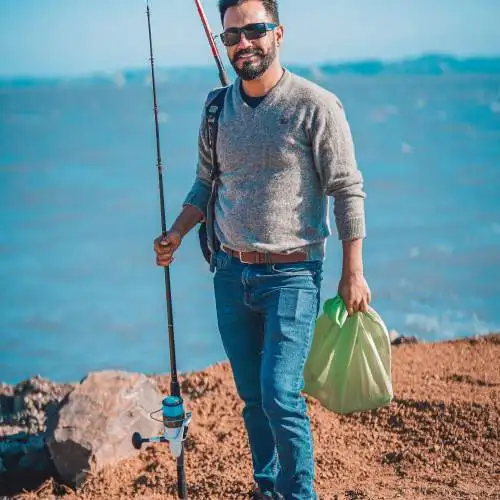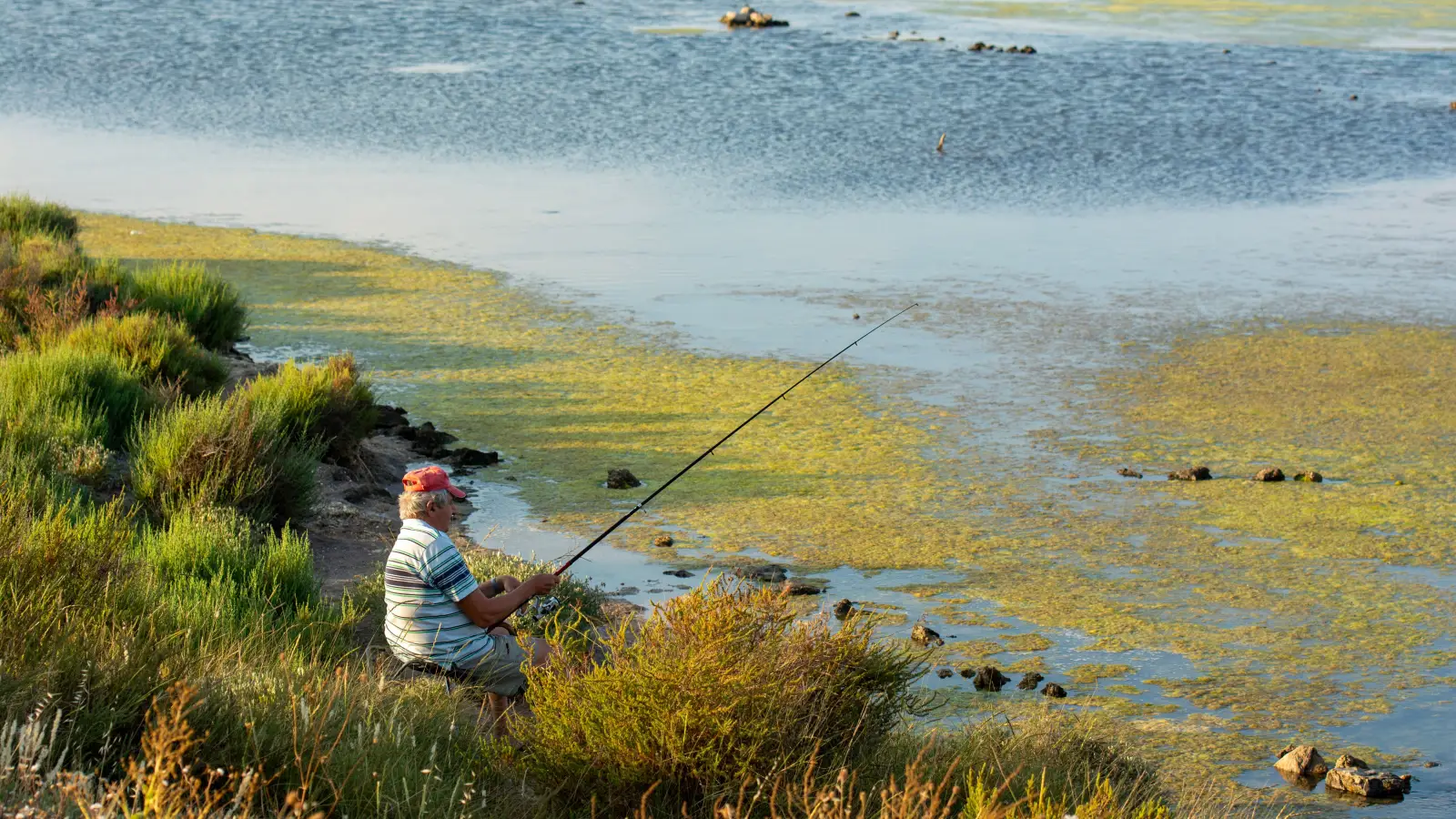
Fishable water doesn't mean water you can stand next to. Before you string up a rod, you need to answer three questions: Can you reach the water safely and stand firmly? Is there enough depth for fish to hold within casting range? Can you present a lure without hanging up every third cast? If a bank can't check all three, move on.
The Few Tools That Actually Help You Read a Bank
- Polarized sunglasses: They cut surface glare so you can see bottom color changes, submerged logs, and depth transitions. Cheap pairs work fine.
- Wading boots or old sneakers: You'll walk the bank through mud, gravel, or loose rock. Footing decides safety and stealth.
- A wading staff or sturdy branch: Jab it into the water to test bottom softness and find drop-offs without getting wet.
- Your rod and a weight: Lower a sinker on your line and feel the bottom. It's the simplest depth finder you have.
A rod and reel are a given. The items above are what let you read the water before you tie on a hook.
A Practical 5-Step Shore Assessment
1. Begin with a Wide Scan from 40–50 Yards Away
Stand back far enough to see a long section of bank at once. Look for breaks in a straight shoreline: points, coves, fallen timber, overhanging brush, or color changes in the water that hint at depth. Baitfish dimpling or a bird working the surface tells you where life is. This vantage lets you skip dead-looking flats and walk straight to the zones worth inspecting.
2. Walk the Edge to Test Access Before You Rig Up
Put your boots where you'll be standing. If the bank is deep muck, a crumbling bluff, or riprap so sharp you can't balance, the spot is unfishable—no matter how good the water looks. Solid footing means you can cast smoothly, set the hook, and land a fish without losing your balance. Also note trampled brush or discarded bait containers; heavy pressure can make fish wary.
3. Gauge Depth and Bottom Type Without Getting Wet
Polarized glasses will show you pale shallows and dark, deeper pockets. Probe with your staff or rod tip. If the water stays ankle-deep for 30 feet over flat sand, you're looking at a desert. Fish need a depth change—a drop-off, a channel edge, a submerged stump—to feel secure enough to feed during the day. If you can't find any transition, pick another stretch.
4. Map Out Clear Casting Lanes
A fishable bank gives you a path to get a lure out and back without fouling every cast. Find a gap between trees or brush wide enough for a comfortable sidearm or overhead cast—at least 6 feet clear. Note the wind direction; casting straight into a gale wastes time. Low-hanging limbs overhead will eat your backcast, so look up as well as out.
5. Read the Visible Cover and Current Seams
Once the bank passes the access and depth tests, find the features that hold fish. Current seams where fast and slow water meet, eddies behind boulders, submerged timber, and weed edges. A muddy plume where a creek enters clear water is a migration highway. A single piece of wood in otherwise barren water is often the only fishable spot. If you can't see any cover within casting range, you're probably looking at a highway without residents.
Common Mistakes That Turn a Fishable-Looking Bank into Wasted Time
Assuming Easy Access Means Good Fishing
Many anglers pull up to a park bench and start casting because it's convenient. Manicured shorelines rarely offer the structure fish need. Check for depth and cover before you commit.
Ignoring the First 10 Feet From the Bank
Anglers often wade in or cast over the near water, but bass and panfish frequently tuck under undercut banks or in the shadow of a single bush right at your feet. Fish the edge before you reach deeper.
Casting into Snaggy Cover With No Recovery Plan
Submerged logs and overhanging limbs look promising, but if you can't free a snagged lure without breaking off, that water is not fishable for you today. Bring a lure retriever or skip it.
Forgetting to Match Your Approach to Water Clarity
Muddy water with six inches of visibility means fish locate food by vibration and scent—use dark, loud baits. Crystal-clear water demands stealth and natural colors. If you can't see a white lure past two feet, change tactics.
Questions Beginners Ask About Reading Shore Water
What's the minimum water depth needed for bank fishing?
In open, clear water, shoot for 18–24 inches within casting range. Fish use shallower water near heavy cover or in low light, but a broad flat under a midday sun holds few fish. A depth change matters more than the number.
Do I need waders to find fishable water?
Waders open up spots you can't reach from dry land, but they aren't a requirement. Many productive banks have firm, gently sloped shorelines. Waders become useful when you need to cross a side channel or fish flooded brush.
How can I tell if fish-holding structure is underwater from the bank?
Polarized glasses reveal dark patches that may be timber or rock. Lower a weighted line and feel for bumps, drop-offs, or a sudden change from hard bottom to soft muck. That transition is a feeding zone.
Can I fish a high, steep bank at all?
If the bank is stable and you can stand safely, lowering a lure vertically can pick up fish holding against the wall. Casting from a height makes lure control tougher and your silhouette spook fish. Only fish high banks when you can do so without risk.
Why do some stretches look perfect but hold no fish?
Low oxygen after a heat wave, a rapid temperature drop, or repeated fishing pressure can push fish out. Some spots only hold fish when current brings bait through. Learning to read current and seasonal timing turns a good-looking spot into a catching spot.
What to Do After You Find Fishable Water
You now have a system for sorting banks that hold fish from banks that hold only disappointment. On your next trip, spend five minutes reading the water before you tie a lure on. Walk the stretch, scan with glasses, probe the bottom. Once you've confirmed a section is fishable, work it efficiently: fan-cast the near zone, then extend your range. If you don't get a response in 20 minutes, move to the next stretch you pre-scouted. The next skill to build is reading subsurface structure with a contour map or by dragging a weight to feel the bottom contour.