Charter captains don’t stumble onto fish. They follow a system: pick the right hull, network the electronics, position the boat deliberately, and read the seasonal patterns. Skip one link and you’re just drifting. Weld them together and you catch fish. This article lays out that system as a single framework—not a pile of unrelated tips—so you can adapt it to whatever water you fish.
Where You Fit in This System
Start with the situation that matches where you are right now. Your path through the article will follow from there.
You’re Rigging a New Boat from Scratch
You own a hull or a budget but the electronics, trolling motor, and wiring are still blank. Your route: lock in the hull choice first, then build the electronics network and positioning skills as one package. Don’t piece them together later.
You Have a Boat but Can’t Consistently Find Fish
You log hours on the water yet other boats pull fish while you run empty. Your route: get the electronics talking to each other, then learn to control the boat so the presentation looks natural. Most of the time the missing piece is that your fishfinder and your trolling motor don’t share data.
You’re Moving Up from a Kayak or Small Craft
You already find fish in tight quarters, but a boat with open water feels unstructured. Your route: pay attention to hull design—bigger water demands a hull built for it—and to how seasonal patterns expand when you can cover more ground.
The Hull Choice That Shapes Everything Else
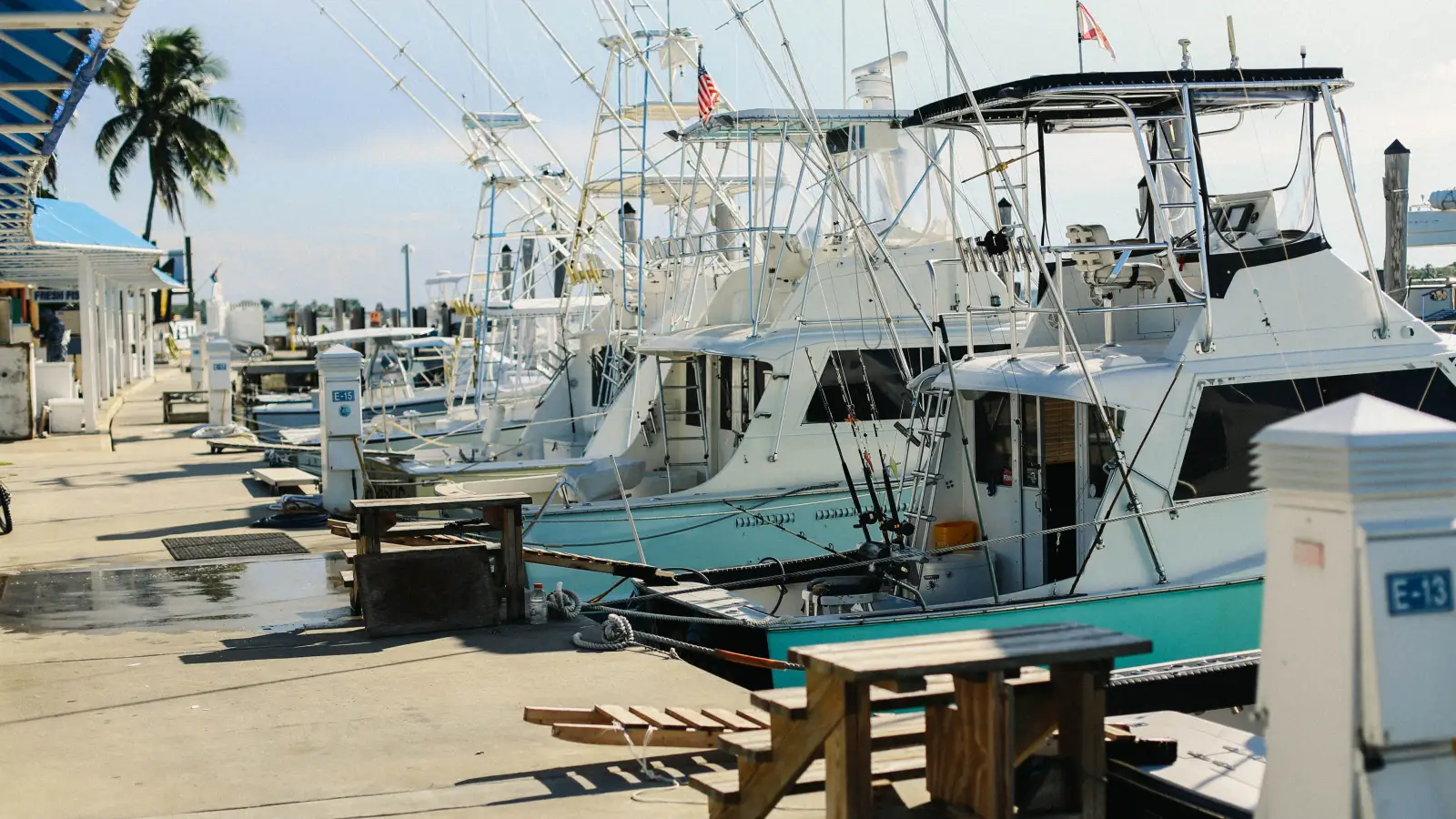
The boat determines screen size, transducer placement, trolling-motor thrust, and the water you can actually reach. A charter captain picks a hull that does one job perfectly for their home water, not a compromise boat that does five jobs poorly.
Start with the water you fish most. Protected bays and flats call for a modified-V or a bay boat with a shallow draft. Big lakes and offshore runs need a deep-V that handles chop—and you accept the extra roll at anchor. Layout counts too: a center console gives you 360-degree fishability and enough console surface for a walkaround electronics setup. A dual-console adds shelter for cold-weather trolling.
Propulsion sets your positioning ceiling. A bow-mount trolling motor with spot-lock plus a shallow-water anchor let you pin the boat over structure without fighting the wind. The captain’s system expects these tools to feed data to the electronics, so mount the transducer where turbulence won’t ruin the signal and run the wires before you touch the water.
Ready to move on: You can state exactly why your hull’s deadrise, draft, and layout fit your fishing and what you’re willing to trade away.
Electronics That Talk to Each Other
A charter boat’s console isn’t a handful of independent screens. It’s a single network. The fish finder, chartplotter, radar, and trolling motor share data over NMEA 2000 and Ethernet. Drop a waypoint on one unit, it appears on all of them. The trolling motor follows a contour line straight off the chart card.
Pick an MFD size you can read from the helm whether you’re standing or sitting. A 9- or 12-inch screen hits the sweet spot. Choose a transducer that covers the water column you fish—side imaging and CHIRP sonar together give you coverage and target separation. Wire the MFD to the trolling motor so you steer toward what you see on the screen and spot-lock straight onto the bottom composition.
Load a high-resolution chart card for your region. Start dropping waypoints not just where you caught fish, but on bait balls, temperature breaks, and bottom transitions. The captain’s real skill is reading the whole underwater landscape, not counting arches.
Ready to move on: You can navigate to a waypoint and read the sonar, down imaging, and side imaging without opening a manual. You can also fire a waypoint from the MFD to the trolling motor and watch it steer.
Boat Handling That Makes the Presentation Right
Fish location is only half the system. A bait has to look natural to trigger a strike. That means boat position must team up with current, wind, and structure—not fight them. Charter captains don’t drop anchor once and hope. They spot-lock, set controlled drifts, or run trolling-motor paths that match how forage moves.
For bottom fishing, run a drift that carries your bait across the structure in the direction the current pushes scent. Slow or steer it with a drift sock or sea anchor. For trolling, use the trolling motor or kicker to keep speed where the prey would naturally swim, and steer along depth contours piped from the networked MFD. For casting banks or weed edges, spot-lock at the right distance and hold—letting the wind shove you across the spot is the number one way rec anglers blow strikes.
Forget about where the fish are for a moment and think about where the boat must sit for the bait to act natural. A fish can be right under the keel, but if the boat swings and the bait rises wrong, you won’t hook up.
Ready to move on: Over 30 minutes on a known fish-holding spot, you reposition at most twice and still keep baits in the zone. You get bites while other boats drift by empty.
Seasonal Pattern Recognition
Charter captains move with the calendar. Water temperature, daylight hours, and forage migrations dictate the shift. The system holds together because the platform, the electronics, and the positioning skills plug into any seasonal scenario.
Learn the seasonal path of the main baitfish or forage in your water first. In most systems, forage pushes shallow in spring, rides thermoclines in summer, and funnels into creek channels in fall. Target species shadow that movement. Use water temp from your transducer to find the edges where fish stack up before a move—a 2–3°F change often marks the active feeding zone.
Layer in pressure windows. A falling barometer ahead of a front can push fish shallow and turn them aggressive. A post-front bluebird sky often sends them deep and tight to cover. The captain’s system adapts: they might switch from deep trolling to shallow casting when conditions flip, but the switch is triggered by what the electronics show, not by a guess.
Ready to move on: With a week’s forecast and water temp data you can predict which part of the water will hold the target species, the depth they’ll use, and the method that will produce. Then test it on the water and prove it.
Readiness Signs: When You’ve Mastered Each Step
- You can explain your hull’s deadrise and layout choice, plus what you lose in other water conditions.
- You can read sonar and navigate to waypoints without a manual, and your trolling motor takes waypoints from the MFD.
- You hold the boat in the strike zone for 30 minutes with minor adjustments, and baits move naturally.
- You look at a week’s forecast and water temps, predict where fish will set up and how to catch them, then confirm it.
Worries You Can Set Aside for Now
Some worries wreck a build before the system even runs. Ignore these until the trigger says otherwise:
- A 16-inch MFD or radar. A 12-inch screen and a solid chart card cover almost everything. Radar earns its keep only when you run inlets in fog or darkness.
- A second station or tower. Expensive, complex, and rarely the real fix. Wait until you can prove you are losing fish because you cannot spot them from the existing helm.
- Every knot and leader system. Run a handful of proven rigs for your species. Add complexity only when you lose fish to leader failure or bad hooksets.
- Perfectly matched rod-and-reel outfits. A few versatile rods covering the weight and depth range you fish will catch plenty. Fine-tune when short strikes tell you the presentation is off.
The trigger is the same every time: you boat fish consistently but hit a concrete, repeatable wall that the new gear will solve.
Shortcuts Worth Taking
One accelerator actually cuts the learning curve without skipping the basics: book a learning trip with a working charter captain. Don’t just fish. Ask why they chose that hull, how the electronics are networked, and how they decide it’s time to move. Watch how they control the boat, read the screen, and shift with the conditions. One day will compress months of trial and error.
FAQ: Quick Answers Before You Rig
How do I network my fish finder and trolling motor?
Most current trolling motors link to an MFD over NMEA 2000 or a proprietary Ethernet connection. You need a heading sensor and the correct gateway cable. After that, you can navigate to waypoints and follow contours straight from the MFD.
Do I need a deep-V hull for inshore saltwater fishing?
Not unless you regularly cross open bays hammered by wind. A modified-V bay boat with a shallow draft works better on flats and in backcountry.
What is the single biggest jump in catch rate?
Getting the electronics and boat positioning to talk to each other. Most anglers own good gear but never link it so that boat control acts on what the screen shows.
How do charter captains find fish so quickly?
They hunt conditions, not fish. Bait, temperature breaks, and depth changes form the picture. Networked electronics deliver the full picture, and they act on it without hesitation.
Can I use this system for both freshwater and saltwater?
Yes. The hull changes but the system stays the same: integrated electronics, deliberate positioning, and seasonal pattern-reading. Swap the chart card and adapt your tactics to the local forage.
What “Fish Every Trip” Actually Looks Like
When the system clicks, you stop hoping and start testing predictions that pay. You move with a reason, your gear backs the move, and you stay or leave on a signal, not a hunch. For the angler starting from a bare hull, step one is deciding the primary water and species, then listing the exact hull and electronics features that make that fishing work—and nothing extra.