Bag limits and slot limits protect the same thing from two different directions: the number of fish in a population that live long enough to spawn. A bag limit caps how many fish leave the water regardless of size, because the fastest way to empty a fishery is to remove fish faster than the population can replace them. A slot limit controls which sizes leave, holding back a middle band because that band is where the reproductive engine of the population sits. Neither rule was written to restrict people for its own sake. Each one is a shape cut to fit a specific biological failure, and once you can name the failure, the rule stops looking arbitrary.
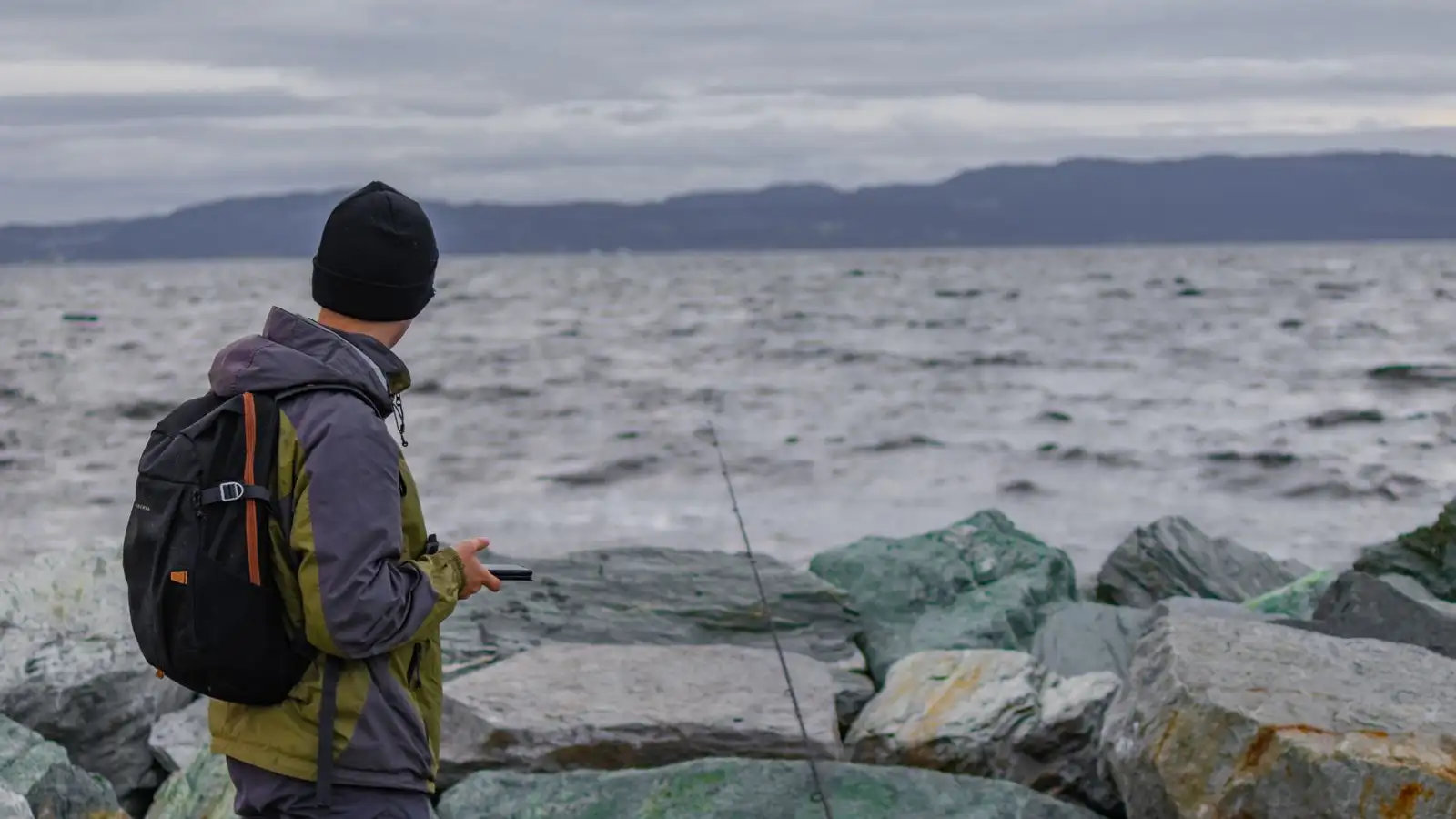
I learned to read them backwards on a reservoir I had never fished, kneeling on the back deck of a borrowed boat before sunrise with a laminated card taped next to the throttle. I had a fish in my hand and no idea what to do with it. The card told me the size I could keep. It told me nothing about why. I remember the wet slap of the bump board against my knee, cold water running down my wrist, the gill plate flaring while I held the fish flat and tried to remember whether the mark I was reading was the upper one or the lower one.
I got it close to wrong that morning, and I spent the drive home turning it over.
What I should have asked was simpler. Not what is the rule, but what went wrong here that made somebody write this rule down in the first place.
Every regulation is an answer to a question nobody printed
Rulebooks print answers. The question lives somewhere else, in a population sample, a creel survey, a run of thin year classes that somebody noticed on a spreadsheet before anybody noticed it on the water.
Once I started treating each regulation as the solution to one specific problem, the whole messy shelf of rules collapsed into a handful of problems. That is the part most anglers never get handed. They memorize the number and carry it to one lake, and then they drive two hours north and the number is different and it feels like the agency is just making things up.
The problem: too many fish leaving the water, full stop
The oldest and bluntest tool is the bag limit. It does not care how big the fish are, how old they are, or whether they have spawned yet. It caps total removals.
The biology underneath it is mortality. Every population of fish is already losing members to natural causes. Fishing mortality stacks on top of that. When the two together exceed what the population can replace through reproduction and survival, the population shrinks. The bag limit is the lever for total removal, and it has one big virtue: it is easy to write, easy to enforce, and easy for an angler to remember at the ramp.
Its weakness is the reason length rules exist at all. A bag limit counts bodies. It treats a young fish and an old, heavy, egg-laden female as the same unit of harvest, and they are nowhere near the same thing.
The problem: fish being caught before they ever spawn
If the data show that too many fish are being removed before they reach their first spawn, the answer is a minimum-length limit. The shape follows directly from the problem. Everything below the line stays, everything above it can go, and the intent is to let each fish contribute at least one round of reproduction before it ends up in a cooler.
I like this one because it is honest about its own narrowness. It is not trying to build a trophy fishery. It is trying to make sure the pipeline is not being tapped before it produces anything.
The problem: too many of the big, mature fish leaving
Flip it. If the sampling shows a lake with almost no large fish left, and the concern is that the biggest, most productive spawners are being skimmed off, you get a maximum-length limit or a protected top end. The logic is that in most fish species, egg production climbs steeply with body size. A big female is not just an impressive fish. She is a disproportionate share of next year's young.
Notice these two rules solve opposite problems. Minimum length protects juveniles. Maximum length protects the brood stock. They pull in different directions because they were invented for different failures.
The problem: the middle of the size range is doing the most work
Now the slot. A slot limit protects a middle band of sizes and lets anglers keep fish below it and sometimes above it.
This is the rule that confuses people most, because it looks like it is protecting the eating-size fish and forcing you to keep the small ones. Backwards again. The reason the middle band gets held back is that in a lot of fisheries that band is made up of the fastest-growing, most reproductively productive fish in the population, and it is the band that recruitment depends on most heavily. Those fish are also on the verge of becoming the large brood fish, so protecting them does double duty: they spawn now, and some of them grow into the class that spawns heavily later.
A slot also spreads pressure out. Instead of concentrating the whole harvest on one end of the size range, it pushes anglers toward the sizes that are least costly to lose. It is a more surgical tool than a bag limit, and it only works when the sampling says the middle really is the engine.
The problem: every fish in the lake is standing in one small area
Seasonal closures exist because of behavior, not just numbers. When fish stage in a creek mouth, stack up below a dam, or run up a tributary on a spawning migration, they are concentrated, they are catchable, and they are at the exact moment when removing them costs the most. Pull a fish off a spawning bed and you have not just taken one fish. You have taken the year class it was about to make, and you have probably stressed the ones still on the gravel.
Closures are timed to that window and nothing else. They are the most efficient regulation on the books, because they shut off the one period when a small amount of fishing does a large amount of damage.
The problem: nobody has a clean comparison anymore
Then there are the special-regulation stretches and the waters held under different rules than everything around them. Some of these exist for a unique strain, a native fish that cannot be replaced from a hatchery, or a population that only lives in one drainage. Others exist as reference water, a stretch fished lightly or not at all on purpose so biologists have something to compare the fished water against. Without a control, you cannot tell whether the numbers moved because of the regulation or because of weather, flow, or a good spawn.
That is the part I find genuinely interesting. Some of those stretches are not there to restrict you. They are there so somebody can eventually tell you whether any of the rest of it works.
How the rule gets made, and why it changes
The raw material is unglamorous. Population sampling, often with electrofishing or netting, to see what is actually in the water and in what sizes. Creel surveys, which means somebody standing at a ramp asking what you caught and measuring it. Mortality estimates, natural and fishing, including the hooking mortality on fish that were released. Usually there is a target, something like a desired level of spawning stock or a range of age classes, and the regulation is the tool chosen to move toward it.
That is why the rules change. When a length limit or a bag limit moves, it is rarely a matter of taste. It usually means the measurements moved, and the old answer no longer fits the new problem.
Here is the flip side I wish more people understood: when a restriction is removed or loosened, that is the regulation working. Recovering numbers is the whole point. A rule that never comes off is either still needed or nobody has looked in a while.
Reading a stretch of water you have never seen
This is why I care about the reasoning instead of the number. The number only travels to one lake. The reasoning travels everywhere.
So I stand at the ramp and read the sign backwards. Slot limit, protected middle band. That tells me the middle size class is the productive one here, which usually means good growth rates and a healthy forage base. A closed season on a tributary tells me there is a spawning run concentrated up that arm, which tells me exactly where the fish will be staging a couple of weeks before that window. A maximum-length protection tells me somebody decided the big fish are worth more in the water than in a livewell, which usually means the population got knocked down once already.
Understanding the intent is what lets me predict where the fish are, not just what I am allowed to keep. It is the difference between following a rule and understanding the water.
Where the logic breaks down, honestly
I do not want to sell this as cleaner than it is.
A slot limit can backfire if it pushes too much harvest onto the small end and blunts a year class before it ever grows. A minimum-length limit can shift pressure upward so that the biggest legal fish are the ones that get taken, which is the opposite of what anyone wanted. Fish populations also compensate in ways that make prediction hard: with fewer mouths to feed, the survivors often grow faster and survive better, so the response to a regulation is rarely a straight line.
And nothing here fixes habitat. If the spawning gravel is silted in, or the flows are wrong, or the water is too warm, no bag limit on earth is going to manufacture a year class. Regulations manage people and mortality. They do not manage a creek.
Compliance matters too, and it is not a small factor. A rule that is biologically perfect but nobody follows is worse than useless, because it produces bad data on top of no protection. That is often the real reason a water gets one kind of regulation instead of another.
What the sign is actually telling you
The fish in my hand that morning went back over the side. The tail hit the water once and it was gone, and I sat there with a wet board across my knees trying to work out whether I had done the right thing for the right reason.
I have kept plenty of fish since. This is not an argument for letting everything go. It is an argument for knowing what the sign is for, because a regulation is a compressed record of something that went wrong in a body of water, and the size and shape of the rule tells you what it was. Read the problem first. The number makes a lot more sense once you know what it is protecting.